

Most airplane windows block nearly all UVB, but some UVA still gets through, and the amount depends heavily on the material. For a single flight, that’s rarely enough to burn skin. Studies measuring UVA behind cockpit windshields found levels comparable to a tanning bed in some conditions, so the smart move is simple: pull the shade, wear broad-spectrum sunscreen on daytime flights, and put on UV-blocking eyewear.
TL;DR:
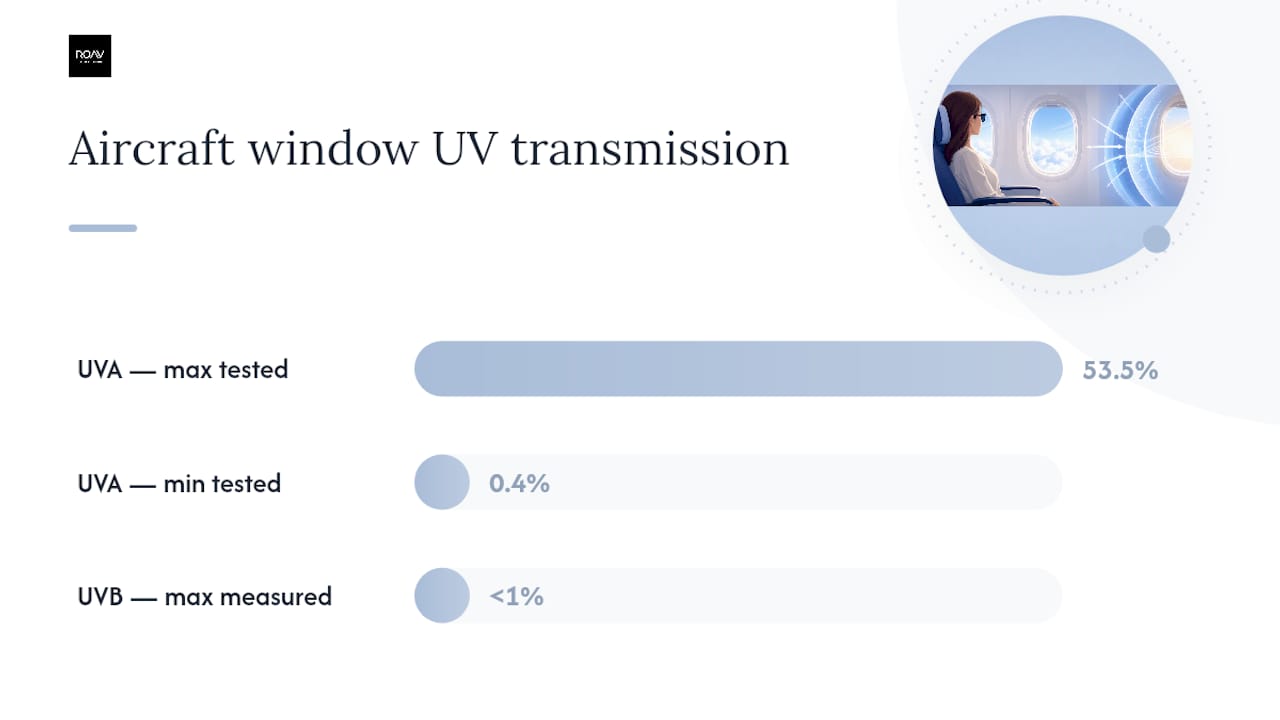
- UVA transmission through plane windows can range from less than 1% to over 50%, depending on the material and design, affecting exposure levels.
- Altitude increases UV intensity by roughly 15% every 900 meters, making higher cruising altitudes a significant factor in UV exposure risk.
- Long flights with extended sun exposure, especially near windows or reflections from snow or water, amplify UVA dose for passengers sitting in sunlight.
- Regular travelers, especially those with photosensitivity or a history of skin cancer, should consistently apply broad-spectrum sunscreen and wear UV-blocking sunglasses.
- Modern aircraft windows built from layered acrylic or polycarbonate provide better UV protection than older cockpit windshields, but cumulative exposure depends on frequency and seating location.
Table of Contents
- Do airplane windows block UV, and how much gets through?
- What does the evidence say about passenger risk versus flight crew?
- How can you protect yourself from UV exposure during a flight?
- Why travel-ready eyewear matters for in-flight UV protection
- Cockpit windows versus cabin windows: why the gap exists
- How do airplane window layers actually filter UV light?
- Does hours of flying add up to meaningful UV exposure?
- Calibrating concern: what actually deserves your attention
- ROAV Eyewear travel picks for in-flight UV protection
- Key studies and resources on airplane window UV
- Sources
- FAQ
Do airplane windows block UV, and how much gets through?
UVB is the wavelength responsible for sunburn and most direct DNA damage to skin cells. UVA penetrates deeper, ages skin faster, and is the wavelength that plays the biggest role in aircraft cabins because it passes through glass and plastic far more easily than UVB does.
Aircraft windows aren’t ordinary glass. Passenger cabin windows are typically built from layered acrylic or polycarbonate, while cockpit windshields often use laminated glass or a glass-acrylic composite designed to withstand pressure and bird strikes. That construction difference matters more than most travellers realize.
A study published in JAMA Dermatology measured UV transmission directly inside aircraft cockpits and found UVB transmission stayed below 1% across the materials tested, which is reassuringly low. UVA told a different story: transmission ranged from roughly 0.4% up to 53.5% depending on the specific windshield material. That’s a massive spread, and it means the answer to “does my window block UV” genuinely depends on what’s between you and the sky.
Altitude compounds the issue; understanding this effect requires knowing how aviation weather patterns influence UV exposure at altitude. UV intensity climbs with elevation, and research tied to pilot exposure studies estimates roughly a 15% increase in UV intensity for every 900 metres of altitude, with cruising altitude generally very high for most commercial flights.
Reflection adds another layer:
- Cloud tops can bounce a significant share of incoming UV back upward through the window.
- Snow and ice fields below reflect a large portion of UV radiation, amplifying exposure for anyone seated near a sunlit window.
- Ocean and water surfaces reflect less than snow but still add measurably to ambient UV at cruising altitude.
What does the evidence say about passenger risk versus flight crew?
The strongest passenger-relevant data point comes from that same JAMA Dermatology measurement study, which compared in-flight UVA doses at altitude to the output of tanning beds. The comparison isn’t perfect, since exposure duration and seating position vary, but it’s the clearest signal available that cockpit-level UVA exposure over a long flight is not trivial.
Meta-analyses tracking pilots and cabin crew found their melanoma incidence runs roughly double that of the general population, a gap that has held up across multiple cohort studies.
That statistic sounds alarming, and it deserves scrutiny rather than panic. The same research flags real confounders: pilots and crew often have more leisure-time sun exposure from layovers in sunny destinations, different lifestyle patterns, and historical differences in windshield materials that don’t necessarily reflect what’s flying today. Causation isn’t settled, and the doubled rate almost certainly reflects a mix of occupational and non-occupational factors.
For the average passenger taking one flight, that risk picture looks very different. Public health guidance from the Cancer Council Australia notes that typical passengers are unlikely to get sunburned on a standard commercial flight, since cabin window plastics do a reasonably effective job against both UVA and UVB compared to a cockpit windshield. The math changes for people who fly often, sit by a sunlit window for hours at a time, take photosensitizing medications, or have conditions like lupus or a history of melanoma. For those groups, the cumulative exposure across dozens of flights a year is a legitimately different question than one afternoon trip.
How can you protect yourself from UV exposure during a flight?
Protecting your skin and eyes on a plane doesn’t require anything exotic. It requires doing on a plane what you’d already do outside on a sunny day, adjusted for the fact you’re sitting still for hours.
- Apply broad-spectrum sunscreen with SPF 30 or higher before boarding if you have a window seat or expect sun exposure, and reapply roughly every two hours on long-haul flights, since sweat, cabin dryness, and rubbing against a seat or blanket can wear it down faster than you’d think.
- Choose your seat with intent. A window seat gives you more control (you can close the shade), while an aisle seat cuts direct exposure entirely; if you’re in a window seat and not using the view, keep the shade down during the brightest parts of the flight.
- Wear UV-blocking sunglasses, not just polarized ones. Polarization cuts glare but says nothing about UV protection on its own. Look for lenses explicitly rated to block UVA and UVB, and pack a pair that folds small enough to keep in a jacket pocket or carry-on for easy access.
- Use light physical barriers for exposed skin. A scarf over the forearms, a lightweight long-sleeve layer, or a cap with a brim adds a passive layer of protection with zero effort once it’s on.
- Flag photosensitizing medications before you fly. Certain antibiotics, acne treatments, and diuretics increase skin sensitivity to UV. If you’re on one of these, a quick check with a pharmacist or doctor about extra precautions is worth the five minutes.
Pro Tip: Keep a travel-size broad-spectrum sunscreen and a compact pair of UV-blocking sunglasses in your personal item, not your checked bag. You’ll actually use them if they’re within reach at boarding, not buried under a stack of magazines somewhere over the ocean.
Why travel-ready eyewear matters for in-flight UV protection
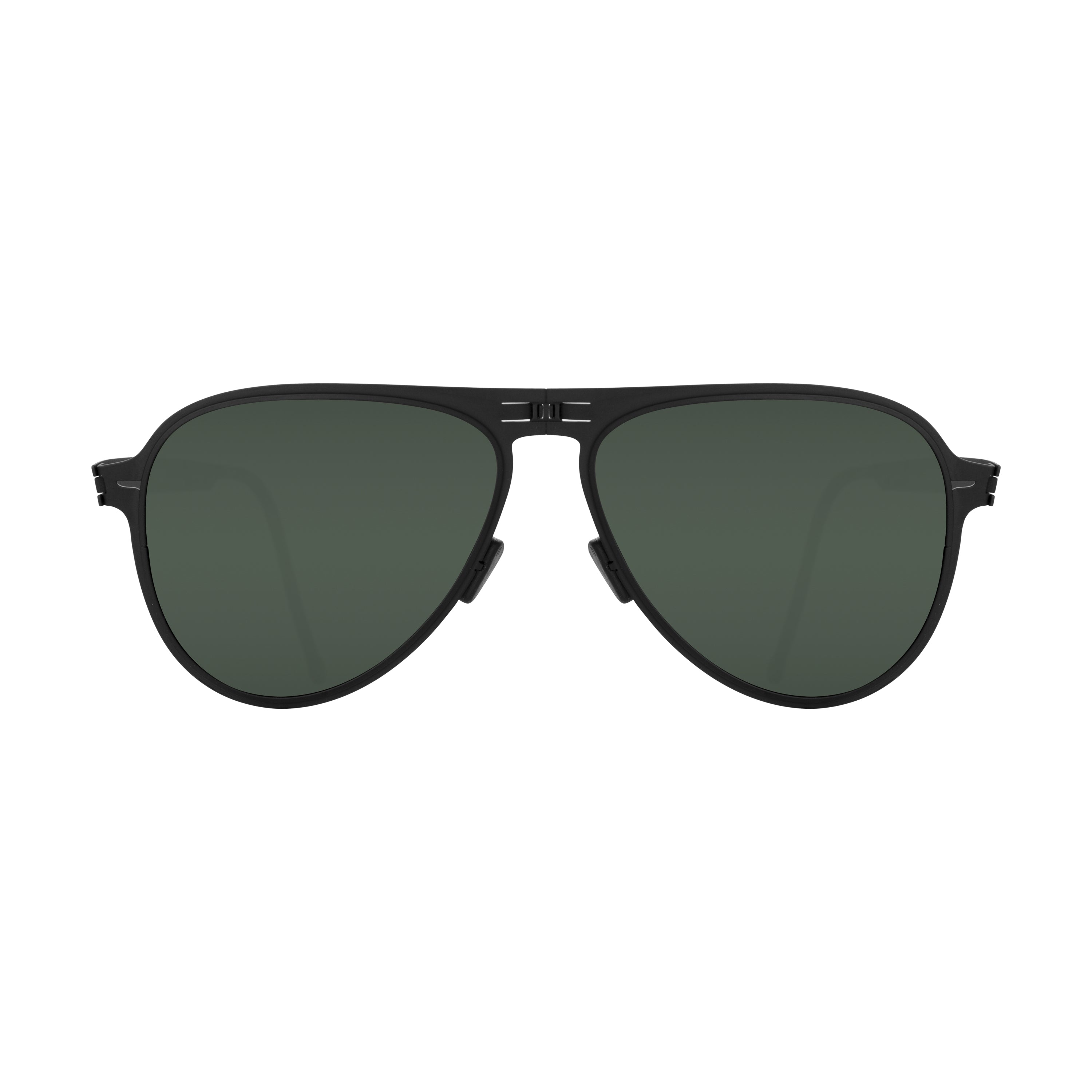
Eyes don’t get the same attention as skin in most sunburn conversations, but UVA reaches the eyes just as easily through a plane window as it reaches exposed forearms. That’s where the right pair of sunglasses earns its keep on a flight, not just for glare but for genuine UV filtering.
A handful of features matter more in the cabin than they do on the ground:
- Broad-spectrum UV-blocking lenses that filter UVA and UVB rather than just cutting brightness.
- A frame that folds down small enough to fit a jacket pocket or setback pouch, so it survives the trip without getting crushed in a bag.
- Lightweight construction that stays comfortable through a long-haul flight instead of pinching after two hours.
- Tint options suited to different light conditions, since glare over cloud tops or snow-covered terrain hits differently than glare on the ground.
Foldable frames built around scenarios like daylight flights with a window seat, airport connections with bright terminal glass, and the need to avoid carrying bulky cases for sunglasses. The micro hinge folding design means a full pair collapses to pocket size, which matters when carry-on space is already tight.
Cockpit windows versus cabin windows: why the gap exists
The UV difference between where the pilots sit and where passengers sit isn’t a minor engineering footnote. Cockpit windshields are built to a completely different structural standard than passenger cabin windows, and that standard shapes their UV behaviour.
Windshields have to survive bird strikes, pressure differentials, and rapid temperature swings at altitude, so manufacturers often use laminated glass or a glass and acrylic composite reinforced with heating elements for anti-icing. Passenger cabin windows carry far lower structural demands and are typically made from stretched or cast acrylic, sometimes polycarbonate, in a simpler layered design.
That structural difference is exactly why the JAMA Dermatology measurements found such a wide UVA transmission range, from under 1% to over 50%, across different windshield samples. Cockpit glass composites, older laminated designs in particular, let through more UVA than the acrylic layers typical of a modern cabin window. Pilots sitting directly behind that windshield for hours, flight after flight, face a measurably different exposure profile than someone in row 24.
This is part of why occupational studies on pilots and crew don’t map cleanly onto passenger risk. The windshield a captain sits behind and the window next to a passenger’s shoulder are not the same barrier, and lumping them together in casual conversation understates how much material choice affects the outcome. It also explains why some pilots and cabin crew associations have pushed for updated windshield UV standards, since older aircraft in service today may not reflect the acrylic advances used in newer builds.
How do airplane window layers actually filter UV light?
A cabin window isn’t a single pane of plastic. It’s typically built as three layers: an outer structural pane bearing the pressure load, a middle pane acting as a backup and moisture barrier, and an inner scratch pane that passengers actually touch, usually with a small breather hole to equalize pressure between the outer layers.
UV filtering happens mostly at the molecular level within the acrylic or polycarbonate itself, not from a separate coating in most standard cabin windows. Acrylic polymers naturally absorb a large share of UVB wavelengths because of how their molecular structure interacts with shorter, higher-energy light. UVA, having a longer wavelength and lower energy, slips through that same molecular structure far more easily, which is precisely why UVB stays under 1% in most measurements while UVA transmission swings so widely by material.
Thickness plays a role too. A thicker or multi-layer acrylic stack absorbs more UVA simply because the light has to travel through more material before reaching the cabin. Some newer aircraft models incorporate UV-inhibiting additives blended directly into the acrylic during manufacturing, which is one reason UV transmission figures vary so much between older and newer fleets. Tint or coating add-ons exist in aviation but are far more common on cockpit windshields, where anti-glare and de-icing functions are already built in, than on standard passenger windows.
Does hours of flying add up to meaningful UV exposure?
A short regional hop and a 14-hour transpacific flight are not the same UV exposure event, and treating them that way misses the point of cumulative dose. UV exposure works on a dose-response basis: intensity multiplied by time. Sitting next to a sunlit window for two hours is a fundamentally different exposure than sitting there for ten.
Long-haul routes that cross multiple time zones and daylight hours compound this further. A flight departing in the morning and landing at night might expose a window-seat passenger to six or more hours of direct daylight at altitude, where UV intensity already runs higher than at sea level and reflection off cloud cover adds even more. That’s a meaningfully different scenario than a one-hour domestic flight scheduled around sunset.
For occasional travellers, one long-haul flight a year isn’t likely to produce measurable skin damage on its own. The concern scales with frequency. Someone flying transcontinental or transoceanic routes weekly for work is stacking hours of elevated UVA exposure across dozens of flights annually, and that’s closer to the exposure pattern epidemiological studies on pilots and crew are actually describing. It’s frequency and duration together, not any single flight, that turns theoretical exposure into a habit worth managing.
Calibrating concern: what actually deserves your attention
The doubled melanoma rate in pilots and crew is real, but it’s an occupational statistic built on decades of repeated exposure, not a warning about your one flight to a wedding next month. Treat single trips with reasonable but unhurried caution: sunscreen if you’re by the window, sunglasses if it’s bright, done.
Frequent flyers and cabin crew are a different case. Routine skin checks, consistent sunscreen habits, and paying attention to any new or changing moles are worth building into a regular routine rather than an occasional afterthought. Longer term, better windshield UV standards across aging fleets would do more for crew health than any individual habit change ever could.
— Thomas
ROAV Eyewear travel picks for in-flight UV protection
If you fly often enough that UV exposure through a window actually crosses your mind, the sunglasses you bring matter as much as the sunscreen. ROAV Eyewear built its lineup around exactly this problem: full UV protection in a frame that survives a carry-on without a hard case.
The ACE Gunmetal+Crystal | Clear folds down small enough to slide into a jacket pocket between connections, which matters more than it sounds like when you’re moving through three airports in a day. For travellers who want a stronger tint against glare over cloud cover, the INGRID Black | Sunset and INGRID Black | Orange-Gradient both pair broad-spectrum UV-blocking lenses with a gradient tint that cuts brightness without distorting colour. If you’d rather keep things neutral, the INGRID Black | Blue-Gradient, DEVON Gunmetal+Crystal | Clear, ACE Gunmetal | Clear, DALLAS Gunmetal+Havana | Clear, and SIERRA Gunmetal+Black | Clear all deliver the same UV coverage in a lighter, more versatile lens. Some foldable eyewear uses micro hinge folding hardware, so packing eyewear becomes easier on daytime flights.
Browse the full lineup and find your fit at ROAV Eyewear.
Key studies and resources on airplane window UV
- UV measurements in airplane cockpits (JAMA Dermatology): direct measurement of UVA and UVB transmission through cockpit windshields.
- Melanoma risk in airline pilots and cabin crew (meta-analysis): cohort data on elevated melanoma incidence and altitude UV effects.
- Can you get sunburnt on a plane? (Cancer Council Australia): public health guidance on passenger-level risk.
- Sun damage and air travel (Ohio State University Wexner Medical Center): clinical guidance on sunscreen and travel protection.
- Protecting pilots against UV radiation (Eurocockpit): background on altitude and reflection effects on UV intensity.
This article is general information, not a substitute for advice from a qualified doctor. Consult a qualified healthcare professional about your own circumstances before acting on anything here.
Sources
- UV measurements in airplane cockpits (JAMA Dermatology)
- The risk of melanoma in airline pilots and cabin crew (meta-analysis)
- Can you get sunburnt on a plane? | Cancer Council Australia
- Sun damage and air travel | Ohio State University Wexner Medical Center
FAQ
Do airplane windows protect you from UV?
Airplane windows block nearly all UVB but allow varying amounts of UVA through, depending on the window material. Measurements published in JAMA Dermatology found UVA transmission ranging from under 1% to over 50% across different windshield types, so protection isn’t uniform across every aircraft.
Can you absorb UV through a window on a plane?
Yes, UVA can pass through standard aircraft window materials and reach skin and eyes during a flight. UVB is far more effectively blocked, typically under 1% transmission, which is why sunburn from a single flight is uncommon but not impossible for someone seated by a sunlit window for hours.
Can you bring UV light on an airplane?
Small personal UV devices, such as sanitizing wands or nail lamps, are generally allowed in carry-on luggage, though airlines and security screening can vary by device and destination. Check with your airline directly before packing anything UV-emitting, since rules aren’t standardized across carriers.
Does UV blocking window film work?
Aftermarket UV-blocking film can reduce UVA transmission through glass and plastic, and the same principle applies to disposable film sometimes used on aircraft windows for personal use. It’s a reasonable supplementary measure, but it doesn’t replace sunscreen or UV-blocking sunglasses for skin and eye protection during a flight.