

For any high-UV destination, insist on sunglasses labelled “100% UV” or “UV400,” full stop. If you’re headed somewhere with water, snow, or desert glare, add polarized lenses to that requirement. For anyone hopping between beaches, mountains, and city streets on one trip, foldable frames like ROAV Eyewear’s INGRID Black | Sunset, CHARLIZE Gold | Light-Purple, and ATLAS Black | Sunset solve the packing problem without cutting corners on protection.
TL;DR:
- Even impact-resistant and foldable frames require a snug wraparound fit and explicit UV400 label for effective eye protection during high-UV travel.
- Polarized lenses improve visual comfort on bright surfaces but do not substitute for UV filtering, so both features should be checked separately.
- Larger, wraparound styles help block UV rays from entering from the sides, making them essential for water, snow, and desert environments.
- Checking the inside arm of the frame for the UV rating ensures the sunglasses are genuinely protective, as labels are often printed there.
- Wearing a dedicated, packable foldable sunglasses with proper UV protection habitually can prevent eye damage and replace the need for multiple pairs.
Table of Contents
- What to prioritize when buying high UV destination sunglasses
- Which sunglasses fit which travel activity
- How to verify UV protection before you buy
- Travel-ready foldable sunglasses built for high UV destinations
- Why sunglasses deserve the same habit as sunscreen
- Sources
- FAQ
What to prioritize when buying high UV destination sunglasses
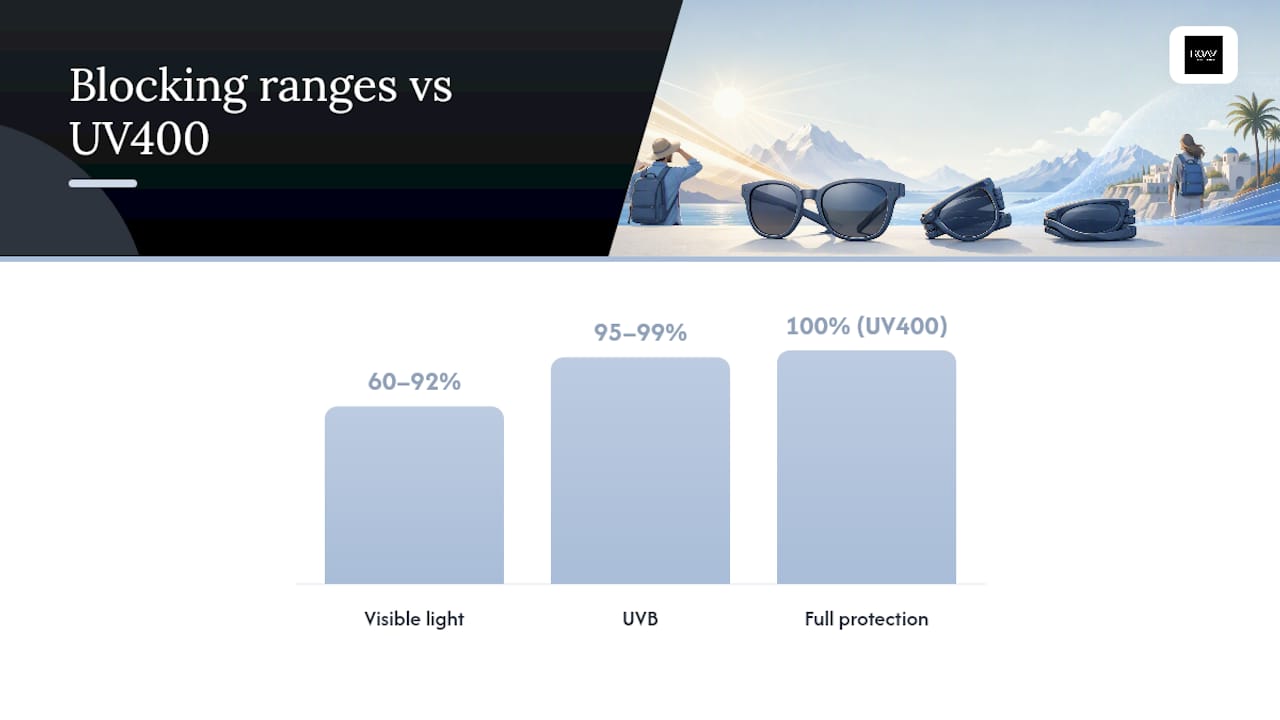
Many people shop for sunglasses based on lens darkness or price, but these factors do not reliably indicate UV protection. The National Eye Institute points out that plenty of sunglasses block 60 to 92 percent of visible light and 95 to 99 percent of UVB rays without ever mentioning UVA coverage at all. The only way to know you’re getting full protection is a label that says “100% UV” or “UV400.”
This matters more than most travellers realize. Harvard Health notes that dark lenses without UV filtering can increase UV exposure because pupils dilate in response to the dimmer light, potentially letting in more unfiltered UV than if you’d worn no sunglasses. An inexpensive pair with a genuine UV400 rating beats an expensive pair that skips the label.
Polarization addresses a separate issue by cutting horizontal glare from surfaces like water, sand, snow, and pavement, providing visual comfort on bright days. However, polarization and UV-blocking are distinct features, and one does not guarantee the other, according to WebMD. A polarized lens with no UV rating still leaves your eyes exposed. Polarization also has a quirk worth knowing about before you buy: it can make LCD screens look dim, patchy, or nearly black, which matters if you plan to check a phone or car dashboard often.
Frame coverage counts too. The Cleveland Clinic recommends larger lenses or wraparound styles because UV rays sneak in from the sides, not just from straight ahead. For warm-climate travel, look for:
- Polycarbonate or nylon lenses, which resist impact and don’t warp in heat
- A snug but comfortable wraparound fit that blocks peripheral light
- Anti-reflective or hydrophobic coatings, which help with comfort and durability but never substitute for UV filtering
- A foldable frame if you’re packing light or moving between climates on one trip
Pro Tip: Check the inside arm of the frame before you buy. Legitimate UV400 sunglasses almost always print the rating directly on the frame, not just on a hangtag that gets thrown away at checkout.
Which sunglasses fit which travel activity
The right pair changes with what you’re doing, not just where you’re going. Here’s how to match features to itinerary:
- Beach and boating days call for polarized plus UV400 lenses together, since water glare is relentless and salt air corrodes cheap metal hardware fast. Look for corrosion-resistant frames and a snug fit that won’t slide off during a swim break.
- High-altitude and snow trips need UV400 without exception. Snow reflects significantly more UV than flat ground, and mirrored lenses cut the extra brightness while a secure, wraparound fit keeps wind and glare from sneaking in at the edges.
- Driving and road trips benefit from polarization for cutting road and windshield glare, but the American Academy of Ophthalmology warns it can obscure LCD dashboards and some ice patches. If you rely heavily on digital instrument panels, a non-polarized UV400 lens or a photochromic option that adjusts to changing light might serve you better.
- Mixed urban itineraries where you’re walking between a café, a museum, and a rooftop bar don’t need specialty lenses. A lightweight, foldable frame with a neutral tint carries you through the whole day and slips into a bag between stops. Our urban travel sunglasses guide covers this scenario in more depth.
Packing two pairs, one polarized for the coast and one clear UV400 pair for driving or evening wear, solves the trade-off better than trying to find one lens that does everything.
How to verify UV protection before you buy
Start with the label.
In a store, ask staff for the manufacturer’s UV spec sheet if it isn’t printed on the frame. Some optical shops keep a UV tester on hand that measures transmission directly. While you’re there, try the fit test: put the glasses on, look in a mirror, and check whether light leaks in from above or the sides. If it does, the frame is too small or sits too far from your face.
Shopping online removes the ability to touch the product, so lean on documentation instead:
- Read the full product description for an explicit UV400 or 100% UV claim, not just marketing language like “sun protection”
- Check the sizing chart against your own measurements, since frame width varies more than people expect
- Confirm the seller’s return policy before buying, especially for a first order from a new brand
Once you own a pair, protect the investment. Rinse salt water or sunscreen off lenses with lukewarm water before wiping, use a microfiber cloth rather than a shirt hem, and store foldable frames in their case with the hinge fully closed to avoid stress on the mechanism. Cheap storage habits are the most common way a good pair of travel sunglasses dies early.
Pro Tip: Keep the original case even after the sunglasses feel broken in. A loose pair rattling around in a beach bag is how hinges and coatings get damaged, not from normal wear.
Travel-ready foldable sunglasses built for high UV destinations
Foldable frames solve a problem every frequent traveller knows: a bulky case eating up carry-on space, or a pair getting crushed at the bottom of a beach bag. Foldable frames use micro hinge technology that lets full-size frames fold down to a fraction of their footprint, so you’re not choosing between protection and packability.
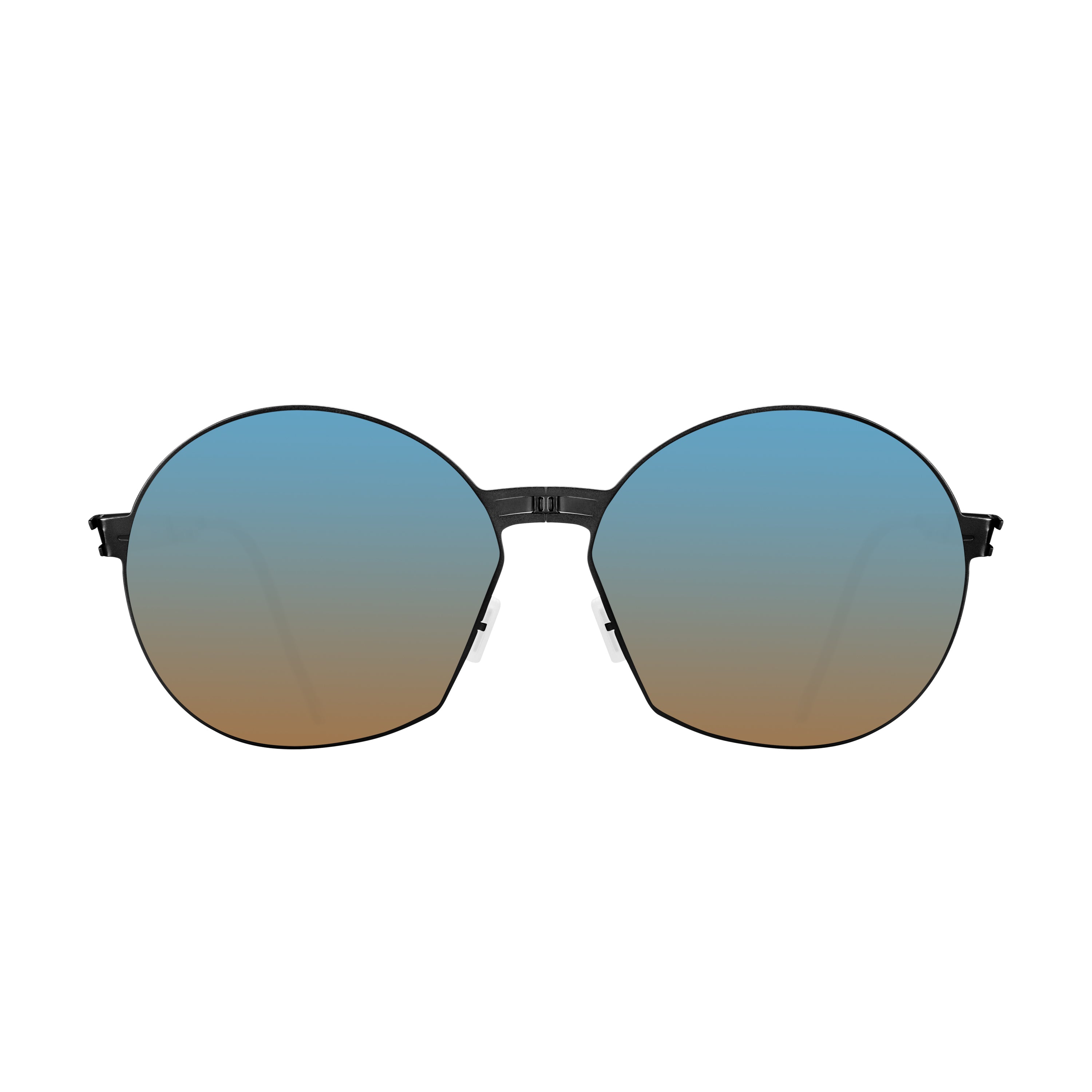
Three models cover most high-UV travel scenarios. The INGRID Black | Sunset suits everyday sightseeing and transit days where you want a frame small enough to disappear into a daypack. The CHARLIZE Gold | Light-Purple brings a lighter, dressier tint that works well for golden-hour walks or evening events on a beach trip. The ATLAS Black | Sunset leans toward active use, built for the kind of day where you’re moving between a hike, a boat, and a car without swapping eyewear.
Each pair comes with a compact case designed around the folded profile, so the frame is protected the moment it’s not on your face. Full specs, sizing, and lens details live on each product page, and the foldable sunglasses collection is the fastest way to compare all the styles side by side. Readers who need corrective lenses can find prescription-ready options in the eyeglasses collection as well.
Why sunglasses deserve the same habit as sunscreen
Most travellers treat sunglasses as a style choice they remember halfway through the trip, once the glare already hurts. That’s backwards. The Cleveland Clinic frames consistent UV protection as a long-term defence against cataracts and macular degeneration, not a one-time purchase decision. Buying the right pair matters far less than actually wearing it every day you’re outside.
The overlooked variable is packability. A great pair of sunglasses left in a hotel room because it wouldn’t fit in a daypack protects nobody. That’s the real case for a foldable frame: it removes the excuse. Pair it with a wide-brimmed hat and make putting them on as automatic as sunscreen, not a step you only remember at noon.
— Thomas
Sources
Check the National Eye Institute’s protective eyewear guidance, the Cleveland Clinic’s sunglasses overview, and the optometry association’s UV resource for deeper reading on eye protection standards.
This article is general information, not a substitute for advice from a qualified doctor. Consult a qualified healthcare professional about your own circumstances before acting on anything here.
- National Eye Institute (NEI) — protective eyewear guidance
- WebMD — what to know about polarized lenses
- Harvard Health — choosing the right sunglasses
FAQ
What does UV400 actually mean?
UV400 means the lens blocks light wavelengths up to 400 nanometres, which covers both UVA and UVB rays. It’s the clearest label to look for, according to the National Eye Institute, since darker lenses without this rating don’t guarantee the same coverage.
Is polarized the same as UV protected?
No. Polarization reduces glare from reflective surfaces like water and snow, while UV protection blocks harmful rays, and a lens can have one without the other according to WebMD. Always check for both on the label separately.
Are foldable sunglasses durable enough for travel?
Yes, when built with quality hinges and impact-resistant materials. Micro hinge designs built specifically for repeated folding enable models like the ATLAS Black | Sunset for active, multi-stop travel.
Do darker lenses mean better UV protection?
No, and this is one of the more common buying mistakes. Harvard Health notes that dark lenses without a UV rating can dilate your pupils and let in more unfiltered light, not less.
How much do ROAV Eyewear’s travel sunglasses cost?
Pricing varies by model and is listed on each product page, including the sunglasses collection and foldable sunglasses collection. Check the current listings on the site for exact pricing.