

For most outdoor use, pick gray or brown/amber, and add a light yellow or amber tint only when you need extra contrast in dim conditions. Colour is a comfort and contrast choice, not a UV shield: check for 100% UV or UV400 labelling separately, and add polarization if glare off roads, water, or snow is your real problem.
TL;DR:
- Polarized lenses effectively reduce glare from flat surfaces like water and roads, but tint color primarily influences contrast and color perception.
- Gray and brown lenses are the best all-around options for driving and general outdoor use, especially with UV400 protection and polarization.
- Yellow and amber tints boost contrast in low light or overcast conditions but can distort traffic signal and color cues.
- Proper lens material, UV protection, and real-world testing are more important than tint color alone for eye safety and performance.
- Different activities demand specific tints, such as amber for snow sports and green or brown for water, with switching pairs often more effective than a single universal lens.
Table of Contents
- What each lens colour for sunglasses actually does to your vision
- Best lens colour for sunglasses by activity and light
- How lens colour affects contrast, reaction time and safety
- Lens material and UV protection matter more than colour
- What I’ve learned testing tints in the field
- Keeping different lens tints clear and scratch-free
- Common myths about lens colour for sunglasses
- My take: buy for protection first, tint second
- Which ROAV pair matches your lens colour needs
- Sources
What each lens colour for sunglasses actually does to your vision
Tint colour changes how your eyes read light, contrast, and colour, and each one makes a different trade. Understanding the mechanics behind that trade beats picking a shade because it looks good on the shelf.
- Gray: Dims light evenly across the visible spectrum without shifting colours, so a red stop sign still looks red and a green lawn still looks green. It is the safest default for driving and general sun exposure because it preserves true colour reproduction.
- Brown/amber: Filters more blue light than gray, which boosts contrast and depth perception, especially against green or blue backdrops like grass, water, or sky. It works well in mixed or changing light, which is why so many all-purpose sunglasses ship with this tint.
- Green: Splits the difference between gray and brown. It cuts glare while keeping colour balance reasonably accurate, making it a solid generalist for long days outdoors.
- Yellow/amber (light tints): Often called low-light tints, these boost perceived contrast in overcast or dim conditions and have been linked to faster hazard recognition in some driving-related tests. The trade-off is colour distortion. Reds and greens can shift, which matters if you rely on colour cues, according to research on tinted lenses.
- Blue/pink/red and mirrored: These are largely style-driven. Blue and pink tints look sharp but do little for functional contrast, and heavy mirror coatings can make a lens feel darker than its actual visible light transmission suggests. Save these for casual wear rather than performance use.
The pattern that matters: darker or warmer doesn’t mean better protected. It just means a different visual experience, and the right one depends entirely on what you’re doing when you put the glasses on.
Best lens colour for sunglasses by activity and light
Matching tint to task is where most people either get real value from their sunglasses or waste money on a pair that looks good but underperforms outdoors.
- Driving: Gray or brown, ideally with polarization to cut glare bouncing off wet pavement and other cars’ windshields. Skip yellow tints for night driving. Even though they can sharpen contrast in daylight, they can distort how oncoming headlights and traffic signals register after dark.
- Water and fishing: Polarized brown or green lenses cut surface glare on lakes and oceans, which is exactly what lets you see fish or structure below the surface instead of a sheet of reflected sky.
- Snow and skiing: Amber or rose tints make moguls and icy patches pop by increasing contrast against white snow. Avoid heavily mirrored, ultra-dark lenses on the slopes. They look dramatic but can mask subtle terrain changes right when you need to spot them.
- Cycling and road sports: Polarization helps here too, particularly on asphalt, and amber or brown tints add the depth perception you want when judging distance to a pothole or another rider.
- Low light or dusk: Yellow or light amber tints boost perceived contrast, but use them with some caution. They can shift how traffic signals and brake lights appear, so this is a case where the contrast benefit and the colour trade-off need weighing together.
Pro Tip: Take your sunglasses outside the store, not just to the window. Look down a road, across a parking lot, or at a patch of grass and pavement side by side. Five seconds in real light tells you more than five minutes under fluorescent store lighting ever will.
How lens colour affects contrast, reaction time and safety
Polarization and tint colour solve different problems, and mixing them up is the most common mistake people make when shopping for sunglasses.
Polarized lenses work by blocking horizontally polarized light, the specific kind that bounces off flat, reflective surfaces like roads, water, and snow. That’s why polarized lenses reduce glare so effectively for drivers and road-sport athletes: the glare source is largely horizontal, and polarization filters it out regardless of what colour tint sits on top of it.
Colour tint, on the other hand, changes contrast and colour perception rather than glare specifically. Some points worth weighing:
- Yellow and amber filters improved hazard-recognition response times for younger drivers in one driving-task study, but the same tints showed limited benefit for older participants and altered colour perception across age groups.
- Contrast gains from warm tints tend to come at the cost of chromatic discrimination, meaning you see edges and shapes more crisply but distinguish similar colours less precisely.
- Visible light transmission (VLT), how much light actually gets through the lens, is a separate spec from tint colour entirely. A light amber lens and a dark gray lens can have wildly different VLT percentages despite looking comparably “tinted.”
If your job or hobby depends on catching a traffic signal, a warning light, or a colour-coded flag at a glance, that’s the moment to prioritize colour fidelity over contrast tricks.
Lens material and UV protection matter more than colour
Tint gets the attention, but the lens material and UV rating are what actually protect your eyes, and they’re independent of colour entirely.
- Polycarbonate or Trivex lenses resist impact far better than standard CR-39 plastic, which matters for cycling, racquet sports, or job sites where debris is a real risk, per guidance on lens materials.
- Look for 100% UV protection or UV400 labelling on every pair, regardless of tint colour or darkness, since a dark lens with no UV coating protects your eyes from glare but not from UV damage.
- Some brands now reference E-SPF, an index describing how much added protection a lens gives compared to no lens at all, which is worth checking if it’s listed on a product page.
- VLT category matters for daily use: categories 3 and 4 (darker lenses) suit bright, high-glare environments like beaches or snowfields, while lighter categories work better for everyday errands and driving in overcast regions.
If a pair of sunglasses only advertises its colour, ask about the material and UV rating before you buy.
What I’ve learned testing tints in the field
The single best thing you can do before buying is trial a tint the way you’ll actually use it, not just glance in a mirror. Walk outside, look at a road surface, glance at a screen, and check a shaded area versus direct sun. That range tells you more than any spec sheet.
- Test polarization specifically near water or on a road; the glare drop is immediate and obvious once you compare polarized to non-polarized side by side.
- Confirm traffic-signal colours still look correct through the tint before committing to it for driving.
- Pack a second, lighter pair when travelling. Foldable frames make carrying a backup tint practical instead of bulky, so you’re not stuck with the wrong lens for a sudden shift from bright coastline to overcast city streets.
Keeping different lens tints clear and scratch-free
Tint colour doesn’t just affect how you see through a lens. It also affects how that lens ages, and a few habits matter more depending on the coating.
Mirrored lenses need the gentlest handling of all. The reflective coating sits on the surface and scratches or clouds faster than a plain tint if you wipe it with a rough cloth or stuff it into a bag loose. Always store mirrored sunglasses in a padded or waterproof pouch, and clean them with a microfibre cloth and lens-safe solution rather than tap water, which can leave mineral spots that dull the reflective finish over time.
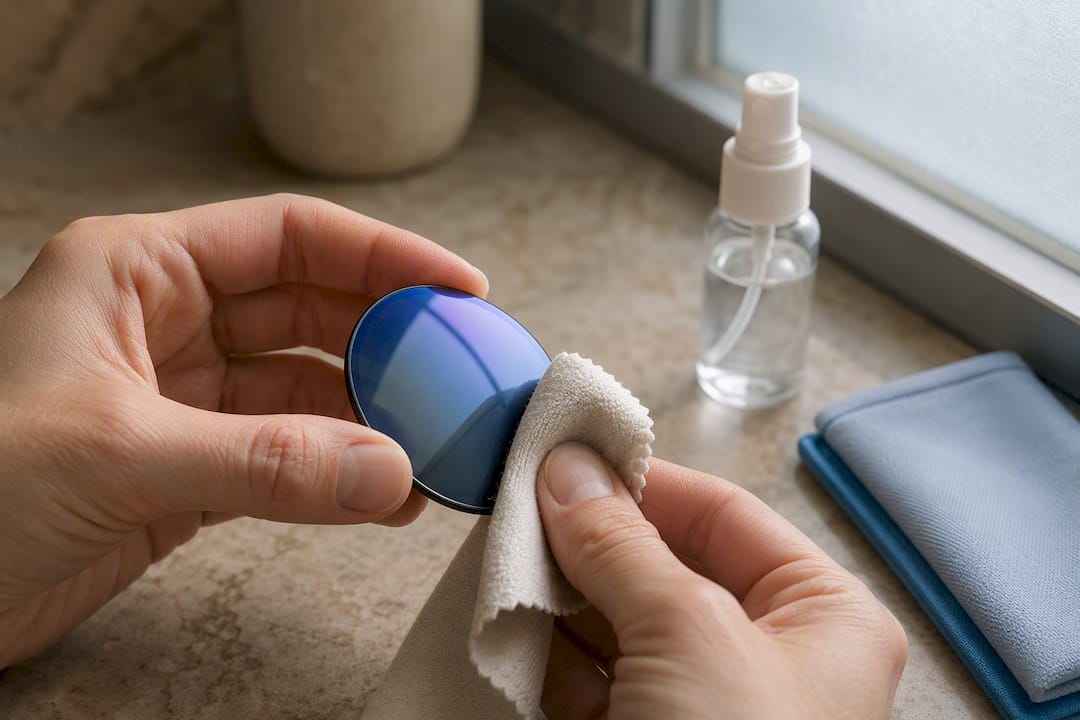
Lighter tints like yellow and amber show smudges and fingerprints more visibly than dark gray or brown, simply because there’s less colour to camouflage residue. Wipe these more frequently, especially after handling them with sunscreen or bug spray on your fingers, since both can etch lens coatings if left to sit.
Polarized lenses, regardless of base colour, have a laminate layer that can degrade with heat exposure. Leaving any pair on a dashboard in direct sun for hours is a bad habit generally, but it’s particularly hard on polarized lenses, which can develop a hazy or bubbled look at the laminate layer over repeated heat cycles.
Across all tints, the same basics apply: rinse with water before wiping if there’s grit involved, use a lens-specific cleaner rather than household glass cleaner, and store the glasses in a case when not on your face. A five-second habit adds years to how clear any tint stays.
Common myths about lens colour for sunglasses
A few misconceptions come up constantly enough that they’re worth addressing directly.
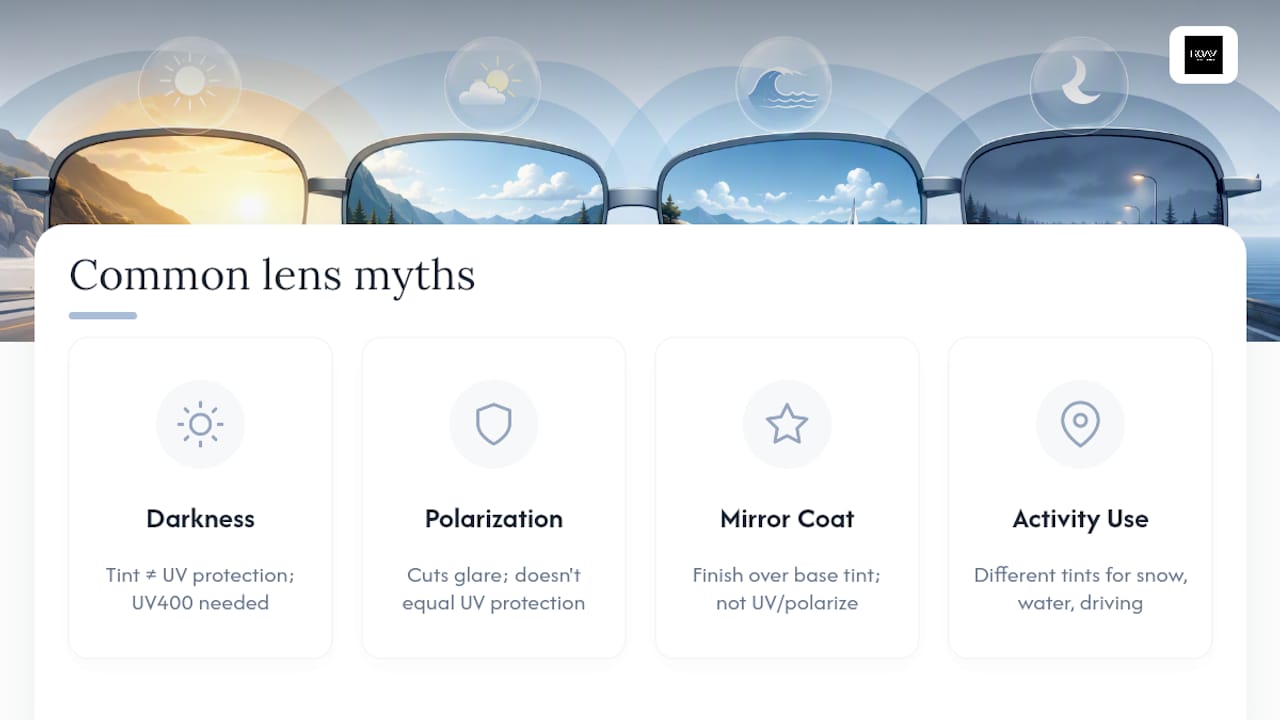
Myth: darker lenses mean better UV protection. Darkness is about visible light transmission, not UV filtering. A light tint with proper UV400 coating protects your eyes just as well from ultraviolet exposure as a nearly black lens with the same coating.
Myth: polarized and UV-protective mean the same thing. They solve different problems entirely. Polarization cuts glare from reflective surfaces; UV protection blocks ultraviolet radiation. A lens can have one, both, or neither, so check the specs rather than assuming.
Myth: mirrored lenses are just a fashion feature. Mirror coatings do reduce visible light entering the eye somewhat, but they’re a finish layered on top of a base tint, not a UV or polarization feature on their own. The base tint underneath still does the visual work.
Myth: one tint works for every activity. Even a great all-purpose brown lens has weak spots. It won’t perform as well on snow as an amber tint, and it won’t cut water glare as well as a polarized green lens. Buying a second pair for a specific activity is often more useful than hunting for a mythical do-everything lens.
My take: buy for protection first, tint second
If you only own one pair, make it gray or brown with genuine 100% UV protection. That covers driving, errands, and most outdoor days without asking you to think twice. If you’re active outdoors regularly, add a polarized amber or brown pair for water, snow, or road use, since that’s where colour and polarization actually earn their keep together.
Tint colour is the part people obsess over, but material and UV rating are what your eyes depend on long term. When your job or a specific sport puts real demands on your vision, a conversation with an optometrist about your exact needs beats guessing from a product description every time.
— Thomas
Which ROAV pair matches your lens colour needs
Once you know which tint fits your routine, the next question is finding a frame that won’t sit in a drawer because it’s too bulky to carry. Some brands offer full-size, functional lenses in frames that fold down small enough for a jacket pocket or a glovebox, so the right tint is actually with you when you need it.
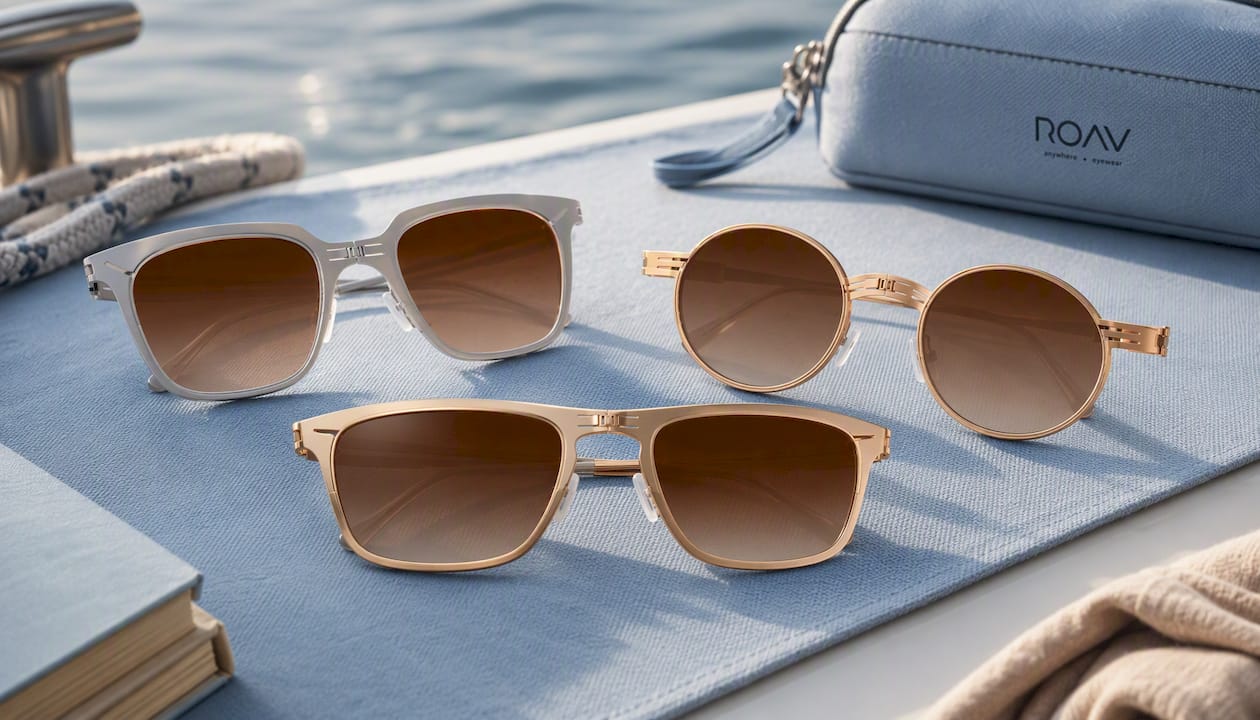
For an everyday, contrast-boosting brown that handles driving, walking, and travel without fuss, the STEVIE Steel | Brown covers the versatile pick this guide keeps circling back to. If you want a similar tint with more personality, the NESTOR Gold | Brown brings the same depth-perception benefit in mixed light with a dressier frame. For a dedicated driving pair, the FRANKLIN Gold | Brown-Gradient uses a gradient tint that cuts overhead glare while keeping the road ahead clear.
Check the UV and polarization specs listed on each product page, then try them the way this article recommends: outside, in real light, against a road or a window, before you decide.
Sources
- Polarization and sports sunglasses (Frontiers in Sports and Active Living, 2023)
- Effect of yellow filters on driving tasks (Ophthalmic/Optometric study, 2013)
- Optometrists