

If you want ultra-light durability for active daily wear, TR90 is usually the better call. If you want richer colour, polish, and a premium feel, acetate wins that contest. The trade-off comes down to weight and flexibility versus depth and style, and models like Some TR90 builds can still deliver a sharp, travel-ready look.
TL;DR:
- TR90 frames are roughly 40 to 50 percent lighter than acetate, making them ideal for long wear and active lifestyles.
- Acetate offers richer colors and patterns, with the ability for custom heat adjustment, but is heavier and less heat resistant.
- TR90 resists impact, temperature changes, and household chemicals, while acetate excels in aesthetic quality and surface resistance.
- Neither material is fully sustainable; TR90’s impact resistance extends lifespan, and acetate’s repairability can also prolong usability.
- Choosing depends on priorities: opt for TR90 for durability and weight savings or acetate for style, finish, and custom fit options.
Table of Contents
- TR90 vs acetate: a side-by-side comparison
- TR90: properties, daily benefits and limitations
- Acetate: properties, aesthetic strengths and practical limits
- Durability, heat and care: keeping either material looking new
- Fit, comfort and everyday wear
- Who should choose TR90, and who should choose acetate
- Your in-store or online checklist before buying
- The environmental footprint behind TR90 and acetate
- Where these materials show up outside eyewear
- Allergies and skin sensitivity: what each material means for your skin
- How ROAV Eyewear thinks about material choice for foldable frames
- Which ACE model matches your material priorities
- Sources
TR90 vs acetate: a side-by-side comparison
Both materials solve different problems, and the gap shows up clearest when you line them up on the specs that actually affect daily wear.
- Weight: TR90 frames run roughly 40 to 50 percent lighter than comparable acetate frames, which matters most during long workdays or all-day travel.
- Durability and impact resistance: TR90 flexes and springs back under pressure, so it shrugs off drops and bends. Acetate is tougher against surface scratches and oils but cracks rather than bends under a hard impact.
- Colour and pattern options: Acetate wins outright here. Its layered sheet production creates tortoiseshell, marbled, and translucent effects that injection moulding can’t replicate. TR90 comes in solid or subtly blended tones, mostly.
- Heat tolerance: TR90 resists deformation in hot cars and beach conditions far better than acetate, which can soften and warp near a dashboard vent or a sunny windowsill.
- Adjustability: Acetate lets an optician heat the temples and bridge for a custom fit. TR90 relies on its own memory rebound instead of manual reshaping.
- Price range: TR90 usually costs less to produce at scale because injection moulding is faster and cheaper than hand cutting sheets. Acetate frames typically carry a higher price tag tied to labour and finishing time.
When you’re shopping, check the product page for the actual weight in grams, a clear material disclosure, and whether the listing mentions heat adjustability. Those three details tell you more than any marketing copy.
TR90: properties, daily benefits and limitations
TR90 is a thermoplastic polyamide, often sold under the trade name Grilamid, engineered specifically for flexural strength. Manufacturers inject the molten polymer into a mould, which lets it hold complex, thin shapes that would be impossible to cut from a flat sheet. That injection process is also why TR90 scales so well for high-volume production runs, keeping unit costs down for brands making sports and children’s lines.
The bend-and-return quality isn’t a flaw, it’s the design goal. Wearers sometimes read that flex as a sign of cheap plastic, when it’s actually the reason the frame survives being sat on.
Where TR90 shines:
- Extremely light on the face for long wear
- Resists snapping under sudden pressure or a fall
- Shrugs off sweat, sunscreen, and most household chemicals
- Holds shape across a wide temperature range
Where it falls short:
- Fewer colour and pattern choices than acetate
- Lower-grade blends can yellow slightly with years of UV exposure
- Can’t be permanently reshaped by heat the way acetate can
Pro Tip: If you’re active outdoors, look for TR90 frames with textured or rubberized temple tips. The material’s slickness combined with sweat can make a smooth temple slide, and a grippy tip fixes that without adding weight.
Acetate: properties, aesthetic strengths and practical limits
Cellulose acetate starts as flat sheets, often layered with multiple colours before a technician cuts, shapes, and hand-polishes each frame. That sheet-based, hand-finished process is exactly why two acetate frames from the same batch can look subtly different, which brands lean on as a selling point rather than a flaw.
The benefits are mostly visual and tactile:
- Rich, layered colour and pattern depth that injection moulding can’t match
- A denser, more substantial feel that some wearers associate with quality
- Heat-adjustable temples and bridge that let an optician dial in a precise fit after purchase
- Strong resistance to surface oils and everyday grime
The limits are just as real. Acetate weighs more, and that extra heft can actually help in one specific case: a heavier frame with well-fitted nose pads tends to slide less on an oily nose bridge than an ultra-light one. But acetate softens and can warp under sustained heat, it’s less forgiving under sharp impact, and the hand-finishing process means longer lead times and higher unit costs than a moulded alternative.
Durability, heat and care: keeping either material looking new
Daily habits matter more than the material itself when it comes to lifespan.
- Clean lenses and frames with a soft microfibre cloth, never a paper towel or your shirt hem.
- Skip the hot car dashboard and direct sunlight on a windowsill. Heat is the single biggest threat to both materials, just in different ways.
- Store frames in a hard case when not worn, rather than tossed loose in a bag.
- Avoid alcohol-based solvents or ammonia cleaners, which can dull acetate’s finish and dry out TR90 over time.
Get acetate frames heat-adjusted by an optician if the fit feels off. TR90 doesn’t need that service. Its memory rebound is meant to self-correct minor bends.
Expect several years of solid use from either material with reasonable care. Watch for loosened hinges, a persistent yellow tint, or a warp that doesn’t spring back. Those are your signals to replace rather than repair.
- Try gently reshaping by hand first if a bend feels minor.
- If the frame doesn’t return to shape, or you hear a crack, stop and see an optician.
- Never attempt a heat fix at home. A hair dryer aimed at acetate can warp it permanently in seconds.
Pro Tip: Keep a soft case in your bag, not just at home. Most frame damage happens in transit, not on your face.
Fit, comfort and everyday wear
Weight translates directly into pressure. A heavier frame concentrates its load on your nose bridge and the tops of your ears, which becomes noticeable after six or eight hours, not the first twenty minutes. That’s where TR90’s lighter build earns its reputation for long-wear comfort.
A few fit features are worth checking regardless of material:
- Adjustable or swappable nose pads, if the frame includes them
- Multiple temple length options rather than a single standard size
- Anti-slip coatings or textured tips at the point of contact behind your ears
- Extra consideration for thick or strong prescriptions, since heavier lenses amplify whatever the frame already weighs
If you have a smaller face, look for narrower bridge widths and shorter temples rather than sizing down a standard frame. Larger faces generally do better with acetate’s structure, since wider frames in that material hold their shape without needing reinforcement that would add even more weight.
Who should choose TR90, and who should choose acetate
TR90 tends to suit active lifestyles: runners, cyclists, parents buying frames for kids who won’t baby them, and anyone who wears glasses from morning to night and wants to forget they’re wearing them. If your prescription is strong and your frame already needs to carry thicker lenses, TR90’s lighter base helps offset that added weight.
Acetate suits the style-first buyer: someone building a wardrobe of frames, who wants an optician’s custom heat fit, or who’s after a finish that photographs and feels premium. Budget-conscious buyers who replace frames often should lean TR90, since the injection-moulded economics keep costs lower. Buyers with sensitive skin should check both, since acetate’s plant-based composition and TR90’s synthetic polymer base both usually cause fewer reactions than metal alloys with nickel content, though individual sensitivity varies.
Your in-store or online checklist before buying
Whichever material you’re leaning toward, run through this short list before you commit:
- Check the listed weight in grams. Anything under roughly 20 grams for a full frame signals a lighter TR90 build.
- Look for a clear material disclosure on the product page. If it’s vague, ask before buying.
- Confirm whether the frame is heat-adjustable, especially if you have an asymmetric fit or a strong prescription.
- Ask about the warranty and return policy, since frame issues often surface only after a few weeks of real wear.
- Prioritize comfort and replaceability over premium finish if you’re rough on glasses or buying for a child. Prioritize acetate’s finish if the frame is a considered, occasional-wear piece rather than a daily workhorse.
The environmental footprint behind TR90 and acetate
Neither material is a clean win on sustainability, but the trade-offs differ. TR90 is a petroleum-derived plastic, and like most synthetic polymers, it doesn’t biodegrade on any practical timeline. Its injection-moulding process is comparatively efficient, though, generating less offcut waste than acetate’s sheet-cutting method, where a meaningful portion of every sheet ends up trimmed away and discarded.
Acetate has a partial edge on raw material origin. It’s derived from cellulose, typically wood pulp or cotton fibre, which makes it a bio-based plastic rather than a purely fossil-fuel one. That said, “bio-based” doesn’t automatically mean biodegradable in a landfill, and the plasticizers blended into most commercial acetate slow that process considerably. Production also involves solvents during the sheet-forming stage, which adds an environmental cost that injection moulding avoids.
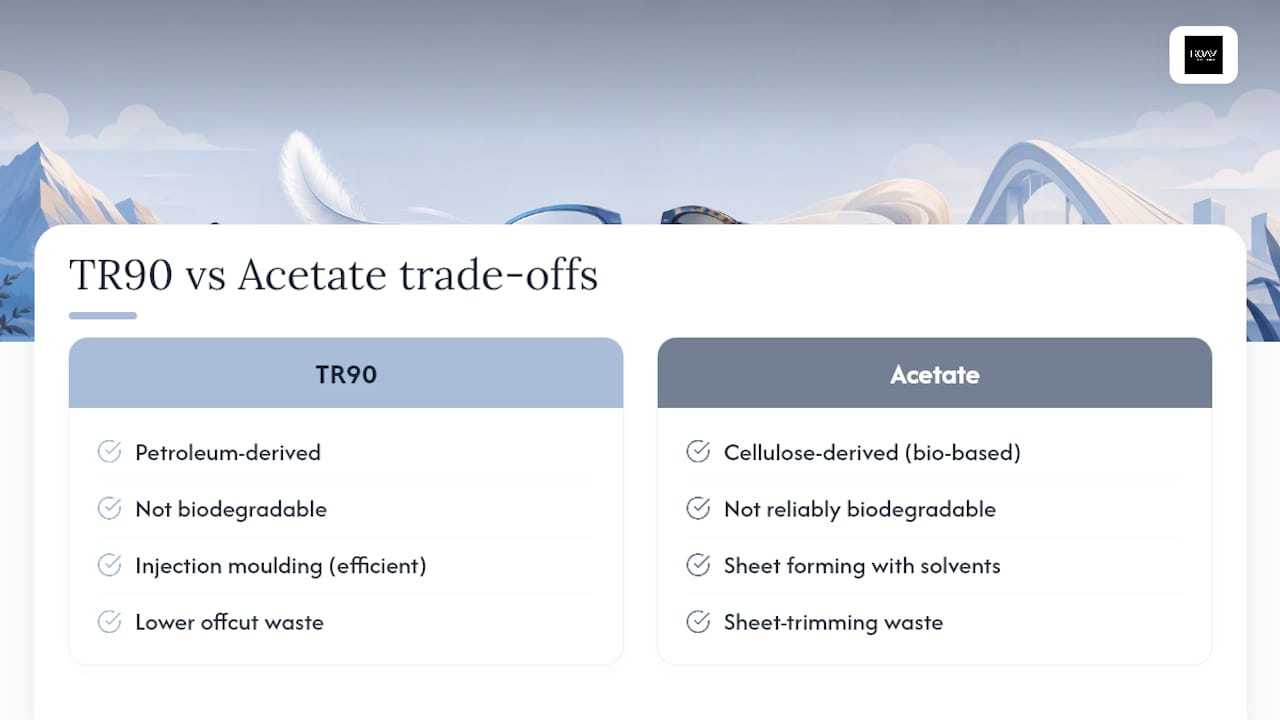
The more useful sustainability lens for a shopper isn’t which polymer wins on paper. It’s longevity. A frame that lasts five years and gets repaired rather than replaced beats a “greener” material that cracks after eighteen months. TR90’s impact resistance and acetate’s repairability through heat adjustment both extend usable life, just through different mechanisms, and extending that life is the biggest lever either material gives you.
Where these materials show up outside eyewear
TR90’s flexural strength and chemical resistance make it useful well beyond glasses frames. You’ll find similar polyamide blends in tactical and impact-resistant safety gear, sporting equipment components, and some medical device housings, anywhere a lightweight part needs to survive repeated stress without cracking.
Acetate’s applications lean decorative rather than structural. Beyond eyewear, cellulose acetate historically shows up in photographic film base, fountain pen bodies, and high-end fashion accessories like combs and buttons, industries that value its layered colour and tactile finish over raw toughness. Both materials also appear in adjacent product categories: acetate in premium watch cases and jewellery inlays, TR90 variants in phone cases and lightweight sporting frames where flex resistance matters more than looks.
Allergies and skin sensitivity: what each material means for your skin
Frame material contact happens for hours a day, so sensitivity questions come up often, especially from people who’ve had reactions to metal eyewear in the past.
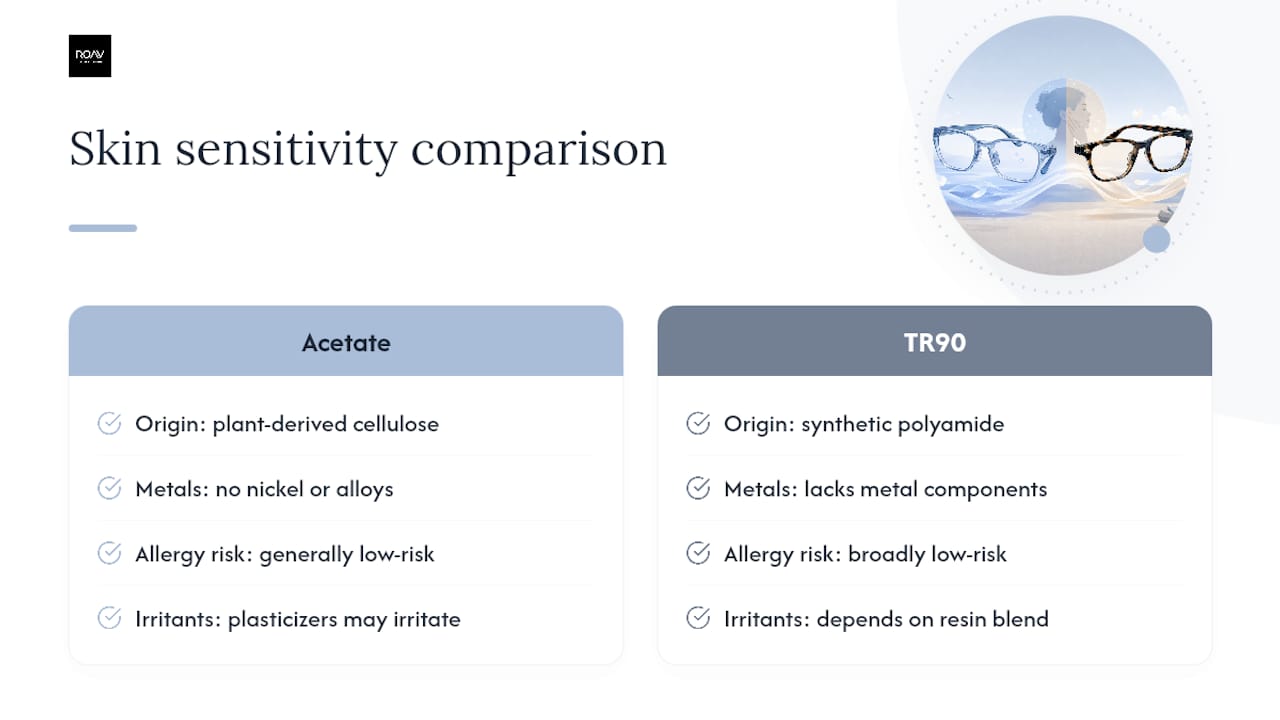
Acetate is derived from cellulose, a plant-based compound, and generally ranks among the more skin-friendly options in eyewear because it contains no nickel or metal alloys. Reactions are uncommon, though the plasticizers used to keep acetate flexible can occasionally irritate very sensitive skin over prolonged contact.
TR90, as a synthetic polyamide, is also broadly considered low-risk for contact allergies since it lacks the metal components responsible for most eyewear-related skin reactions. If you’ve reacted to metal temple arms or nose pads before, either plastic tends to be a safer starting point. Anyone with a documented plastic or chemical sensitivity should still ask about the specific resin blend before buying, since formulations vary between manufacturers, and a known reaction history matters more than the general safety profile of either material class.
How ROAV Eyewear thinks about material choice for foldable frames
Building a frame that folds down to pocket size changes the material calculus. Some foldable frame makers lean on TR90 and comparable durable composites because the hinge mechanism needs a frame that flexes without fatiguing. Combined with our patented micro hinge technology and feedback from more than 100,000 customers, the goal has stayed consistent: fashion and function shouldn’t be a trade-off, especially in a frame that’s supposed to disappear into a pocket.
— Thomas
Which ACE model matches your material priorities
Some brands build lines to prove that a durable, foldable frame doesn’t have to look like a compromise.
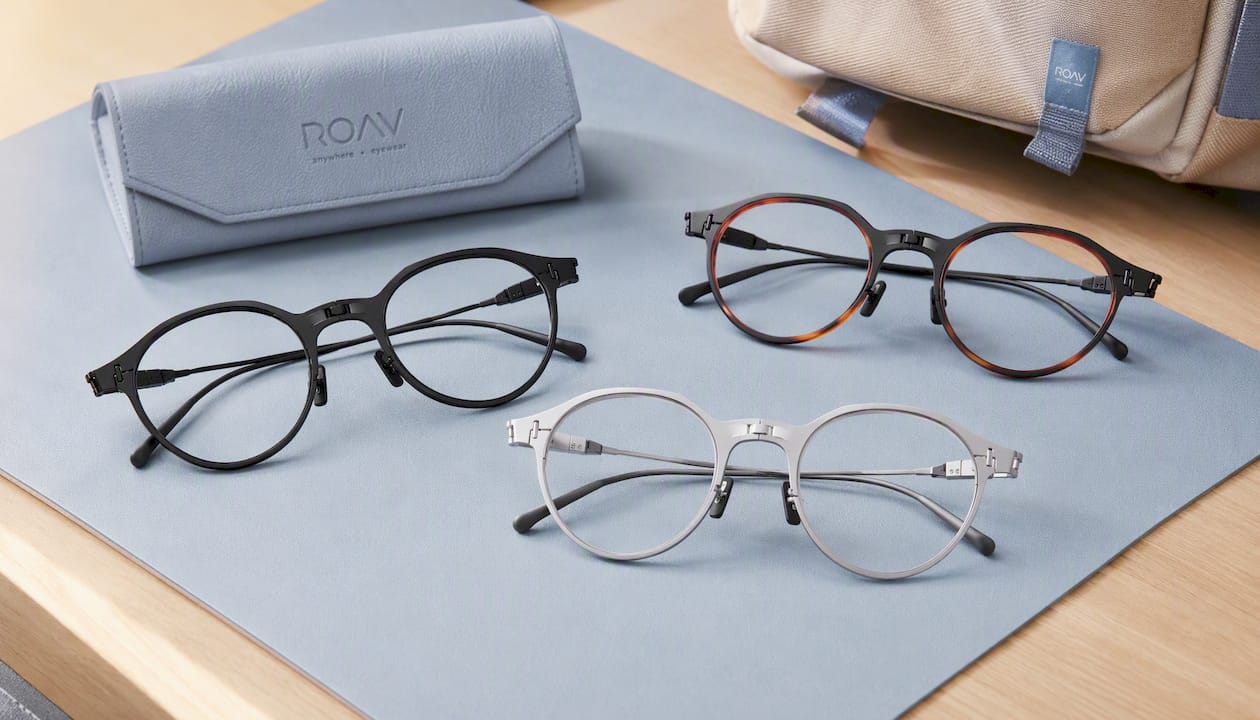
If everyday resilience is your top priority, the ACE Black | Clear gives you that lightweight, impact-ready build in a frame that folds flat for a bag or glove box. Want something with a bit more warmth and dimension without giving up durability? The ACE Black+Havana | Clear blends a tortoise-inspired finish onto the same tough frame architecture. If you’re after a more polished, refined look for the office or evenings out, the ACE Steel | Clear delivers that sharper aesthetic while keeping the same fold-flat portability. All three ship with clear lenses and a sizing guide on each product page, so check your bridge and temple measurements against the listed specs before you order, and browse the full ACE lineup to compare styles side by side.
Sources
- PubChem
- PMC polymer/materials review (NCBI PMC)
- Acetate vs TR90 Frames: Which Material Suits Your Brand? (Lansee)
- Eyewear-suppliers