

The best sunglasses for trail running are ROAV’s INGRID and AUDREY styles, with the SKYLANDER as the pick for high-exertion sessions. INGRID’s gradient tints handle shifting forest and open-trail light while folding flat for a pack or pocket. AUDREY offers a secure, low-bounce fit for everyday runs. All three meet the UV protection thresholds that matter most on exposed terrain.
TL;DR:
- UV protection should meet at least 90% UVA and 95% UVB standards, with explicit labelling, not just tint darkness, to ensure proper eye safety.
- Tints like amber and rose enhance contrast on shaded, rooty trails, while grey and brown are better suited for bright, open terrain.
- Fit and retention are critical for stability during technical runs, with adjustable nose pads and temple grips reducing slippage and discomfort.
- Foldable sunglasses with micro hinge technology offer durability and packability, making them ideal for multi-day trips and variable trail conditions.
- Impact-resistant polycarbonate lenses are standard for trail running, with frame durability and correct fit being essential for safety and performance.
Table of Contents
- Top picks for trail running by use case
- How to choose trail running sunglasses without wasting money
- Lens materials and tints for spotting trail hazards
- Fit and retention: staying secure on technical trail runs
- Care, storage, and why foldable frames matter for trail runners
- Who should buy which model and what to do next
- Impact resistance and safety standards for trail terrain
- Prescription lenses and insert compatibility
- Weather and light conditions that change what you need
- What years of trail miles teach you about eyewear that actually works
- Try foldable trail eyewear built to keep up
- Primary sources behind the UV and safety guidance
- Sources
- FAQ
Top picks for trail running by use case
Not every trail run asks the same thing of your eyewear. A short forest loop with dappled light calls for something different than an exposed ridge run at altitude, and a multi-day travel trip adds packability to the list of demands. Here is how the lineup breaks down by the problem each model solves.

The INGRID Black | Blue-Gradient suits runners who move between shaded singletrack and open exposure in the same session. The blue-gradient tint cuts glare on bright sections without going so dark that you lose detail under tree cover, and the foldable hinge means it disappears into a hydration vest pocket when the trail dips back into shade. For runners who prefer more warmth in their tint, the INGRID Black | Orange-Gradient does the same job with a tint that leans toward contrast rather than neutrality, which some runners find easier on rooty, uneven terrain. The INGRID Black | Sunset rounds out the trio with a tint built for early morning or late afternoon runs when the sun sits low and flat light hides trail texture.
The AUDREY Black | Moonrise is the model to reach for when fit matters more than lens variety. Its frame geometry sits closer to the face than a typical fashion sunglass, which reduces the bounce that comes with technical footing and quick direction changes. Runners doing regular loops on familiar, moderately technical trails tend to prefer AUDREY for exactly this reason: it disappears on your face and stays there.
The SKYLANDER Black | Moonrise targets a different problem entirely: heat and sweat during long, hard efforts. Its build favours lower weight and more open venting than AUDREY, which matters once you are two hours into a summer long run and fogging becomes a bigger risk than glare. Runners training for ultras or doing back-to-back sessions in warm weather are the best fit for this model.
Three more models round out specific needs rather than general trail use. DEVON Gunmetal+Crystal | Clear and ACE Gunmetal+Crystal | Clear both use clear lenses, which makes them a reasonable choice for early morning runs, overcast forest trails, or as a base frame for readers who want to add prescription lenses. SIERRA Gunmetal+Black | Clear follows the same clear-lens logic in a different frame shape, useful for runners who found DEVON or ACE didn’t sit right on their face.
- INGRID (Blue-Gradient, Orange-Gradient, Sunset): best for runners covering mixed light and travel days who want tint choice and foldable storage.
- AUDREY Black | Moonrise: best for everyday technical trail runs where a secure, low-bounce fit is the priority.
- SKYLANDER Black | Moonrise: best for long or hot-weather efforts where weight and airflow matter most.
- DEVON, ACE, SIERRA (clear lenses): best for low-light conditions or as a frame suited to prescription needs.
Prices for all these lines are available directly on the sunglasses collection, which lists current options by frame and lens combination.
How to choose trail running sunglasses without wasting money
Picking trail eyewear is easier when you rank your criteria instead of comparing every spec at once. Fit and retention should come first, because a pair that bounces or slides is a distraction you will notice on every technical descent, no matter how good the lens is.
- Check fit and retention before anything else. Push the frame up and down on your nose, shake your head hard, and see if it shifts; if it moves, the lens quality won’t save the run.
- Confirm UV protection meets a real standard. Health Canada recommends sunglasses that block at least 90% of UVA and 95% of UVB rays, and lens darkness alone does not indicate that level of protection, so look for explicit labelling rather than judging by tint.
- Match tint to the terrain you actually run. Amber and rose tints boost contrast on technical, root-covered singletrack; grey and brown work better on bright, open sections; photochromic lenses adjust across both but can lag in cold weather.
- Factor in ventilation and anti-fog design for longer efforts. A frame that traps heat against your face will fog faster than one with open channels near the brow and temple.
- Weigh price against how often you’ll actually run in these. A pair worn twice a week for years justifies a higher price tag more than a pair bought for one race.
Pro Tip: Try the headshake and 30-second jog test in the store or at home before committing: if you feel pressure points on your temples within the first minute, they’ll be worse three hours into a long run.
Budget tiers roughly track feature depth rather than brand name. Entry-level sunglasses typically deliver on basic UV protection but skimp on adjustability and venting, according to trail-runner gear reviews comparing budget and premium options. Mid-range pairs add adjustable nose pads and better lens coatings. Premium models bring photochromic or interchangeable lenses, more refined venting, and, in the case of foldable designs, a hinge system built to survive years of folding and unfolding without loosening.
Lens materials and tints for spotting trail hazards
Lens material determines how a pair holds up to a fall, and tint determines how well you spot the root or rock before your foot finds it. Polycarbonate is the standard for trail running because it resists impact well relative to its weight, which matters if you go down on a rock garden. Higher-clarity polymer lenses trade a small amount of impact resistance for sharper optical clarity, a reasonable trade for runners who prioritize detail over worst-case durability. Glass lenses offer the best clarity of the three but add weight and break risk, which is why they are rare in dedicated trail eyewear.
Tint choice changes what you notice on the ground. Rose and amber tints boost contrast, which helps on forested singletrack where roots and rocks blend into shadow. Brown tints add depth perception in similar conditions with slightly less colour distortion. Grey is the neutral option, good for bright, open trail with even lighting. Clear or light yellow lenses suit low-light dawn or dusk runs and heavily overcast forest canopy. Photochromic lenses adjust to changing UV exposure automatically, which sounds ideal for mixed conditions, but field tests found they can be slow to darken or lighten in cold temperatures, so don’t count on instant transitions when you break out of tree cover into full sun.
- Polycarbonate: the standard trail choice for impact resistance at low weight.
- Amber and rose tints: best for contrast on rooty or rocky forested trails.
- Grey and brown tints: best for bright, open, evenly lit terrain.
- Photochromic lenses: useful across variable light but slower to adjust in cold conditions.
Polarized lenses cut glare off water, wet rock, and snow, which helps on exposed alpine trails or river crossings, according to Health Canada’s guidance noting that standard sunglasses block only 60 to 92% of visible light depending on the pair, with polarization adding glare reduction on top of that. The trade-off is that polarization can mute subtle surface contrast on technical singletrack, occasionally making it harder to read fine texture changes in the trail underfoot. Anti-fog coatings help but wear down with repeated cleaning, so treat them as a feature that needs occasional renewal rather than a permanent fix.
Fit and retention: staying secure on technical trail runs
A pair of sunglasses that shifts on a descent is worse than no sunglasses at all, because you spend attention managing the frame instead of watching your footing. Start with three adjustability points: nose pad movement, temple arm flex, and whether the frame accepts a retention strap. Nose pads that can be bent slightly to match your face shape prevent slipping from sweat. Temple arms with a bit of flex grip the head without pinching, which matters over a two- or three-hour effort.
Retention options extend beyond the frame itself. Silicone temple grips add friction where the arm meets your ear, which reduces slide on sweaty runs. Strap loops let you attach a cord for runs where you expect heavy impact or water crossings. Headband-style straps show up mostly on ultra-distance setups, where losing eyewear mid-race is a bigger problem than looking sleek.
Test any new pair before race day. A 30-second jog with a hard headshake at the end reveals most fit problems immediately. Follow it with 10 rapid stair-steps or a short set of jumping jacks to simulate the vertical jounce of technical descents; if the frame stays put and you don’t feel a pressure point forming on your temples, the fit will likely hold for longer efforts too.
- Nose pad and temple check: adjust for a snug but not pinching fit before your first run.
- Add retention accessories for long or technical efforts: grips or straps matter more as distance and terrain difficulty increase.
- Run-test before committing: a jog plus headshake and stair-steps will surface most fit issues in under a minute.
Ventilation design plays into fit as much as comfort. Small gaps near the brow or temple let airflow move across the lens without letting in enough wind to dry your eyes, which is the balance a well-designed frame is aiming for.
Care, storage, and why foldable frames matter for trail runners
Lens care is simple but easy to skip after a muddy run. Use a soft microfibre cloth and a small amount of mild soap and water; anything rougher, including a shirt hem covered in trail grit, will scratch the coating over time. Anti-fog coatings degrade faster with abrasive cleaning, so stick to gentle products and only reapply an anti-fog treatment if the factory coating has visibly worn thin.
Foldable frames solve a problem that fixed frames don’t: what to do with your sunglasses when the trail dips into shade or you start climbing hard enough to want them off your face. A folded pair takes up a fraction of the space of a rigid frame, which lowers the odds of losing or crushing them when you stash them loose in a vest pocket. For runners doing multi-day trips or point-to-point races, that packability extends beyond the run itself into travel days before and after.
- Clean with microfibre and mild soap only: rougher materials scratch coatings and shorten lens life.
- Reapply anti-fog treatment sparingly: overuse or harsh cleaners wear the coating down faster.
- Fold and stash rather than hang or clip: a compact frame is less likely to snag, crush, or fall unnoticed from a pocket.
Pro Tip: Keep a lightweight waterproof pouch clipped inside your pack for wet or muddy runs, and save the harder case for travel days when the glasses aren’t going in and out of your hands every twenty minutes.
For more detail on maintaining a foldable frame over years of use, see this guide to durable foldable sunglasses.
Who should buy which model and what to do next
If you only buy one pair, the INGRID Black | Blue-Gradient covers the widest range of trail conditions with a tint that handles both shade and open sun, plus the packability to bring on travel. Runners who prioritize a snug, low-bounce fit over tint variety should look at AUDREY Black | Moonrise instead. Anyone training for long, hot efforts where fogging and heat buildup are the bigger risk should choose SKYLANDER Black | Moonrise for its lighter build and airflow.
For more on how polarization and UV protection interact, this piece on UV versus polarized sunglasses breaks down the trade-offs in more depth than a single buying guide can cover. Warranty and return details vary by product and are best confirmed directly on each product page before you buy.
Impact resistance and safety standards for trail terrain
Trail running puts sunglasses at real risk of impact, whether from a branch, a fall, or a stumble on loose rock. Polycarbonate lenses are the standard material for this reason: they absorb impact better than glass at a fraction of the weight, which is why most dedicated sports eyewear uses them rather than higher-clarity alternatives. Frame construction matters just as much as lens material. A screwless, one-piece hinge design has fewer points that can loosen or fail on impact compared to a frame held together with small screws that can back out over months of folding and flexing.
There is no single trail-specific certification that all running sunglasses carry, so the practical approach is to prioritize polycarbonate or a comparable impact-resistant polymer lens, confirm the UV rating meets Health Canada’s recommended thresholds, and treat frame durability claims from the manufacturer as a starting point rather than a guarantee. A frame that survives repeated folding without loosening is a reasonable proxy for overall build quality, since the hinge is usually the first part to fail on cheaper foldable designs.
Prescription lenses and insert compatibility
Many trail runners need corrective lenses, and clear-lens frames like DEVON Gunmetal+Crystal | Clear and ACE Gunmetal+Crystal | Clear work well as a base for this. A clear or lightly tinted frame gives you the option to have prescription lenses fitted without the added cost of a tinted lens you’d then need to replace. ROAV’s eyeglasses line is built separately from the sunglasses collection for exactly this reason, since prescription needs and sun protection needs don’t always overlap in the same frame.
Runners who wear daily prescription glasses and want tinted protection on the trail have two practical paths: fitted prescription lenses in a frame built for that purpose, or prescription inserts that clip behind a standard sunglass lens. Insert compatibility depends on frame depth and shape, so it’s worth checking a specific model’s fit before assuming any frame will accept one. If your prescription is mild, some runners find contact lenses paired with any of the tinted trail models simpler than managing an insert system on technical terrain.
Weather and light conditions that change what you need
Bright, open exposure calls for a darker, neutral tint like grey, and this is also when UV exposure is highest. Overcast forest canopy is the opposite problem: too little contrast rather than too much light, which is where amber or rose tints earn their keep by making roots and rock edges stand out against the trail surface. Variable light, the kind you get moving in and out of tree cover on the same run, is the hardest condition to solve with a single fixed tint, which is why photochromic lenses exist, even with their cold-weather lag.
Snow and altitude change the calculation further. Environment and Climate Change Canada notes that fresh white snow can reflect over 80% of UV rays, and UV intensity increases with altitude, so alpine or winter trail runs justify a darker lens or a higher UV Index response than a shaded valley run would. Matching your lens choice to the UV Index rating for the day, rather than just the visible brightness, is a more reliable way to judge how much protection you actually need.
What years of trail miles teach you about eyewear that actually works
The gap between what trail sunglasses promise and what they deliver usually comes down to one thing: fit tested under real jounce, not fit checked in a mirror. A frame can have the best lens on the market and still fail you if it slides half an inch on a technical descent and you spend the next kilometre pushing it back up your nose instead of watching the trail.
Foldable frames get dismissed by some runners as a travel gimmick, but the packability solves a real problem on trail: what to do with your eyewear the moment you duck under tree cover or start a hard climb where sweat becomes the bigger issue than glare. A frame you can fold flat and stash without worrying about the lens getting scratched changes how often you actually use it correctly, rather than just accepting whatever eye strain or glare comes with leaving them off.
A patented micro hinge technology and a large customer base reflect a design built around that packability problem specifically.
— Thomas
Try foldable trail eyewear built to keep up
Most trail sunglasses ask you to choose between a secure fit and something that survives being shoved in a pack. Foldable frames, built on a patented micro hinge system, fold flat enough to disappear into a vest pocket without a hard case, and the screwless construction is designed to handle years of folding without loosening.
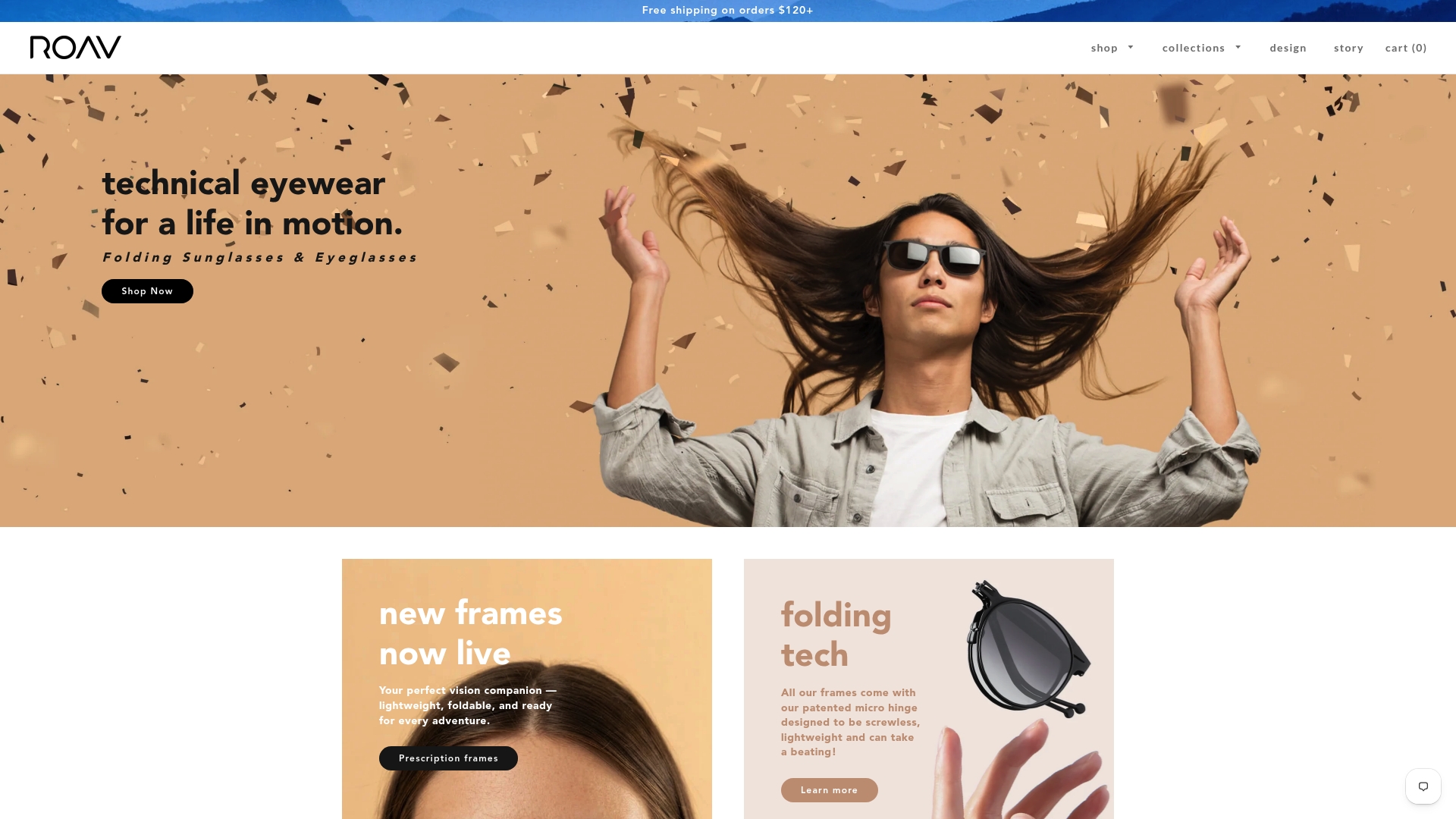
The INGRID Black | Blue-Gradient and INGRID Black | Orange-Gradient cover the widest range of trail light conditions, while the SKYLANDER Black | Moonrise is built for long, hot efforts where weight and airflow matter most. Browse the full foldable sunglasses collection to compare tints and frame shapes side by side, or go straight to the sunglasses collection if you want to see every option in one place. If your needs run toward corrective lenses rather than sun protection, the eyeglasses line uses the same folding frame design.
Primary sources behind the UV and safety guidance
The UV protection thresholds referenced throughout this guide come from Health Canada’s sunglasses guidance, which recommends lenses blocking at least 90% of UVA and 95% of UVB rays. Altitude and snow-reflectance notes draw on Environment and Climate Change Canada’s UV Index guidance. Field observations on fit, bounce, and photochromic lens performance come from a gear review of trail running sunglasses used here to illustrate practical trade-offs rather than to rank specific products.
FAQ
Which is better, UV protection or polarized lenses?
UV protection is the non-negotiable feature since it protects your eyes from long-term sun damage, while polarization is a comfort feature that cuts glare off water, snow, or wet rock. Look for both, but never accept a polarized lens as a substitute for confirmed UV blocking; Health Canada notes that lens darkness alone doesn’t indicate protection level.
What colour lenses work best for running?
Grey and brown tints suit bright, open trail with even light, while amber and rose tints improve contrast on shaded, rooty singletrack. Photochromic lenses adjust across both conditions automatically but can be slower to darken or lighten in cold weather.
What kind of sunglasses do trail runners and hikers typically wear?
Hikers and trail runners generally favour lightweight, polycarbonate-lensed sunglasses with adjustable nose pads and temple grips for a secure fit over long distances. Foldable frames add the benefit of compact storage for multi-day trips or variable-light sections of a route.
Are polarized sunglasses good for running?
Polarized lenses help most on runs near water, wet rock, or snow where glare is a real problem, but they can mute subtle surface contrast on technical singletrack. For most forested or mixed-terrain trail running, a good contrast tint often matters more than polarization alone.
Do foldable sunglasses hold up as well as regular frames for trail running?
A well-built foldable frame, particularly one using a screwless micro hinge design, can match the durability of a fixed frame while adding the advantage of compact storage. The trade-off to watch for in cheaper foldable models is hinge looseness over time, so frame construction quality matters more than the folding mechanism itself.