

A quick clean of the nose pads plus a small temple or pad adjustment fixes most slipping within minutes. If that’s not enough, adhesive silicone pads, temple grips, or a professional fitting will finish the job. The usual culprits are oily skin, a bridge that’s too wide, worn-out pads, or temples that have lost their curve. This guide walks through every fix, from the fastest to the most permanent, and flags the moments when a repair shop is better than a DIY attempt.
TL;DR:
- Ensuring the frame has the correct bridge width and properly adjusting nose pads can significantly reduce slipping caused by poor fit.
- Common quick fixes include cleaning oils and sweat from the nose bridge, adding adhesive silicone pads, or using temple grips and elastic straps for immediate grip improvement.
- For more durable results, gentle, incremental adjustments of nose pads and temple arms are safer than forceful bends, with plastic frames softened in warm water to prevent damage.
- When frames are consistently slipping despite adjustments, replacing worn pads or choosing lighter, properly fitted frames with the right measurements is the best long-term solution.
- Professional repair is recommended if frames have structural damage, or for precise pad replacement, re-bending temples, or custom fitting beyond basic DIY adjustments.
Table of Contents
- Why glasses slide down your nose
- Quick fixes you can try right now
- How to adjust nose pads and temple arms safely
- Long-term fixes and choosing frames that stay put
- When should you see a professional instead of DIY?
- Wearing glasses occasionally over contact lenses
- What we’ve learned building eyewear people actually keep on their face
- Fix the slip at the source: nose pads and frames built for fit
- Sources
Why glasses slide down your nose
Most slipping comes down to one of four things: fit, weight, wear, or skin. Figuring out which one applies to you is the difference between a fix that lasts a day and one that lasts a year.
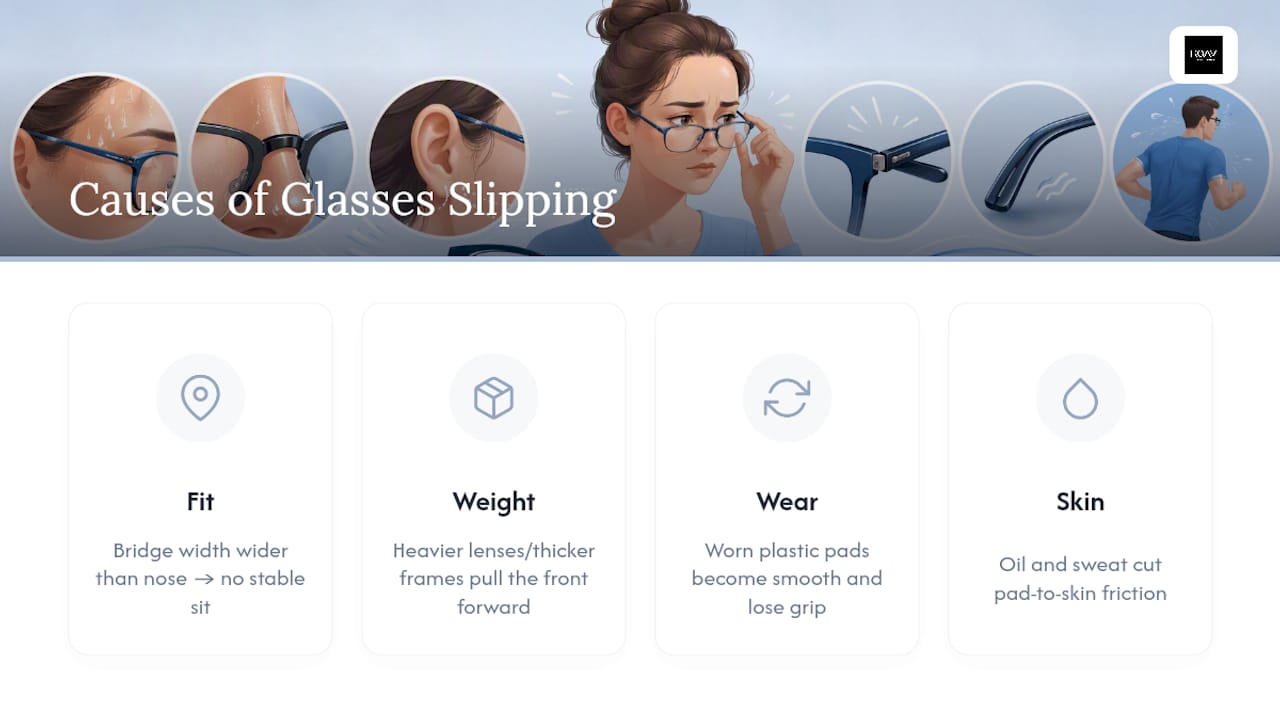
Frame size mismatched to your face is the biggest offender. If the bridge width, measured in millimetres and usually printed inside the temple arm, is wider than the bridge of your nose, the glasses have nowhere stable to sit and just keep drifting forward. This is also why two frames that look identical in a display case can behave completely differently on your face.
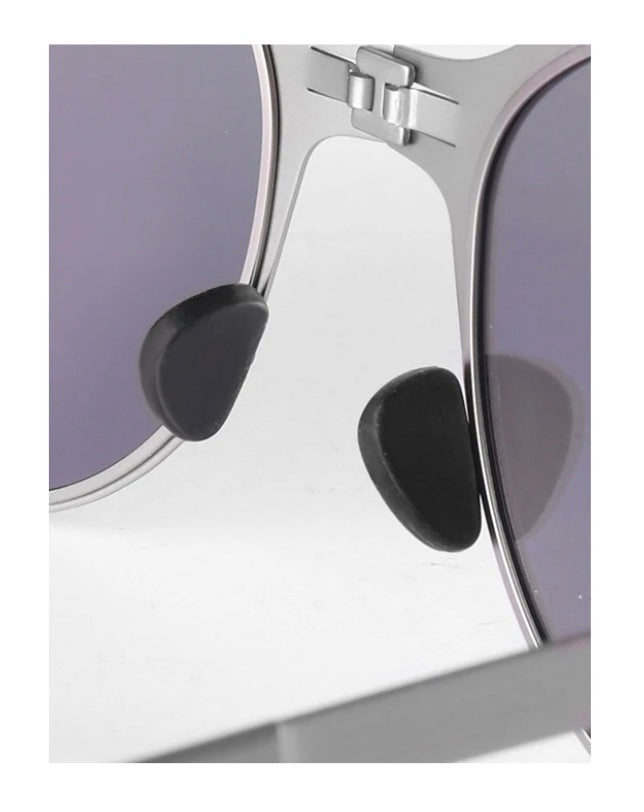
Nose pads themselves matter more than people expect. Adjustable metal pads on wire arms can be bent to hug your nose more tightly, while the built-in plastic pads molded into cheaper acetate frames can’t be adjusted at all. Once those fixed pads wear smooth from months of contact, there’s no grip left, and the only real remedy is adding separate adhesive pads or replacing the frame.
Temple arms do a surprising amount of the work. The length, the angle where they bend over your ears, and how snugly the hinge sits all affect whether weight gets distributed across your ears and nose, or dumped entirely onto the bridge. A loose hinge screw throws that balance off fast, letting one side droop and pull the whole frame down at an angle.
Then there’s simple physics. Heavier lens materials and thicker frames create more forward pull, and that pull only gets easier to overcome once your skin gets slick. Oil and sweat cut the friction between pad and skin dramatically, which is why the same frame that stays put on a cool, dry morning slides constantly by afternoon or during a workout.
Quick fixes you can try right now
Before touching any screws, run through this list. Most people solve the problem here.
- Clean the nose bridge and pads. Wipe them down with an alcohol wipe or lens-safe cleaner. Regular cleaning of nose pads and temple tips reduces slippage caused by oils and sweat, and it takes about ten seconds.
- Try eyeglass wax or a dab of beeswax on the nose pads. It’s a short-term hold, good for a night out or a workout, but it wears off and needs reapplying.
- Add self-adhesive silicone nose pads. These stick directly onto your existing pads or the frame’s bridge area and add real grip without any tools. Adhesive silicone nose pads are a low-cost option to add grip to plastic frames, and they come in enough shapes and sizes that you can match them to how your frame actually sits.
- Use temple grips, ear hooks, or a thin elastic strap. Silicone temple grips slide over the arms and add friction right where they curve behind your ears; ear hooks do something similar for smaller or lighter frames.
- Check for a loose hinge screw. A small eyeglass repair kit (the kind with a tiny screwdriver bit) lets you tighten this in seconds. A small eyeglass repair kit helps with temple and nose-pad adjustments, though some repairs are safer left to a professional, which we’ll get to.
- Manage skin oils directly. Blotting papers or oil-absorbing sheets, the same kind sold for facial skincare, work well across the nose and can buy you hours of stay-put wear between cleanings.
Common fixes like cleaning oils, adding adhesive pads, using temple grips, and tightening screws solve the vast majority of slipping complaints without a trip to the optician.
Pro Tip: Keep a small pack of alcohol wipes and one self-adhesive nose pad kit in your bag or car. Ninety per cent of slipping fixes itself the moment oil and grime are gone from the bridge.
How to adjust nose pads and temple arms safely
This is where you move from surface fixes to actually changing how the frame sits on your face. Go slowly here. Small, repeated adjustments beat one big bend every time, and rushing is how frames get bent past the point of no return.
What you’ll need:
- A clean microfibre cloth
- A small eyeglass screwdriver (comes in most repair kits)
- Padded pliers, if you have them (regular pliers can scratch or crush thin metal)
- A bowl of warm water
Here’s the step-by-step process:
- Protect the lenses first. Lay the frame face down on a cloth or drape a cloth over the lenses while you work, so you’re not accidentally scratching them with tools.
- Adjust one nose pad at a time. Adjust a single nose pad at a time, and check fit after each small change rather than bending both sides at once. Moving pads outward gives you more surface contact and a lower sit; moving them inward raises the frame slightly and tightens the grip on a narrower bridge.
- Squeeze gently, not hard. For metal pad arms, use gentle, incremental movements to avoid damaging the pad arms; a firm but controlled pinch with padded pliers is usually enough. Overcorrecting is the single most common mistake here.
- Try the glasses on after every adjustment. Look in a mirror at eye level, not looking down at a phone screen, and check that both pads are symmetrical against your nose.
- For plastic frames, soften the temple tips first. Soak plastic frames in warm water for 30 to 60 seconds to soften temple tips before bending, keeping the lenses out of the water. Heat makes the plastic pliable enough to reshape without cracking.
- Bend the ear curve gradually. Once warmed, apply light, steady pressure to increase or decrease the curve behind the ear. A tighter curve holds better on smaller ears; too tight and it’ll pinch and leave marks within an hour.
- Check both sides match. Hold the frame up and compare the temple curves and pad angles side by side. Uneven temples are one of the most common causes of glasses that slide to one side specifically.
- Replace nose pads if they’re worn smooth or cracked, rather than trying to keep adjusting pads that have lost their texture entirely. Adhesive silicone pads work here too, layered right over old plastic pads if the frame doesn’t support swap-out arms.
A small but real number of do-it-yourself adjustments go wrong not because of bad technique but because of impatience. Adjustments made one small increment at a time, tested against the face between each change, tend to succeed where big single bends usually overshoot.
What to avoid entirely: drilling new holes for pad arms, using pliers without padding on metal frames (it leaves permanent marks), and applying direct heat like a hairdryer or lighter to plastic. Some repairs, especially anything involving permanent structural changes, are safer left to professionals to avoid damaging the frame or voiding a warranty.
Long-term fixes and choosing frames that stay put
Quick fixes solve today’s problem. If your glasses have slipped constantly for months, the real fix is usually in the frame itself, not another round of adhesive pads.
Start with measurements. Every frame has three numbers stamped inside the temple, something like “52-18-140.” That’s lens width, bridge width, and temple length, all in millimetres. If your current frames feel loose no matter how much you adjust them, the bridge number is likely too wide for your face, and no amount of pad-bending will fully compensate for a frame that’s fundamentally the wrong size. Comparing that number against your current best-fitting frame styles before buying again saves a lot of repeat frustration.
Material matters too. Acetate frames tend to hold an adjusted shape better than cheaper injection-molded plastic, and they respond well to the warm-water softening technique described above. Lightweight frame builds also reduce the forward pull that drags glasses down over the course of a day, which matters if you’re active or simply wear glasses for ten-plus hours straight.
If you own plastic frames with fixed pads that just won’t hold, ask whether adding separate adjustable pads makes sense. It’s a reasonable middle step between “live with it” and “buy new frames,” though it’s worth checking with wherever you bought them, since adding adjustable pads to a molded frame can affect warranty coverage in some cases.
Either way, build in basic maintenance: check hinge screws every few months, replace pads once they’ve gone smooth or yellowed, and wipe down the bridge daily. Cleaning pads and tightening screws regularly prevents the gradual loosening that turns a well-fitted frame into a sliding one a year later.
When should you see a professional instead of DIY?
Some signs mean it’s time to put the pliers down. Visible cracks near the hinge, a temple arm that won’t hold its shape after warming and bending, or one side sitting noticeably lower no matter how you adjust the pads all point to structural damage beyond a home fix. If your glasses are still under warranty, check the terms before attempting any pad swaps or bends yourself.
An optician or repair shop can do things a home kit can’t: precise pad replacement matched to your exact frame model, laser measurement of your face for a genuinely custom fit, and proper heat-and-bend reshaping of temples using professional tools rather than a bowl of tap water.
Before you go, jot down what’s happening (slides within an hour, worse on one side, only during exercise) and ask about turnaround time and cost. Many shops handle simple pad or screw fixes on the spot, often free or under $20, while a full temple reshape or pad replacement might take a day.
Wearing glasses occasionally over contact lenses
If you mostly wear contacts and only reach for glasses at the end of the day or during flare-ups of dry eye, slipping tends to show up differently than it does for full-time glasses wearers. Your nose hasn’t built up the same tolerance or muscle memory for where the pads should sit, so even a well-fitted frame can feel like it’s constantly migrating.
Keep a single backup pair fitted and adjusted specifically for this use, rather than grabbing an old prescription pair with pads that no longer match your face. Since you’re not wearing them daily, oils and sweat don’t get wiped off as often just through natural handling, so a quick alcohol-wipe clean before putting them on makes a bigger difference than you’d expect.
Lightweight frames are worth prioritizing here too. If you’re switching between contacts and glasses depending on eye comfort, a heavier frame sitting unfamiliar on your nose for the first time that day is far more likely to slide than one built to sit light from the start, something worth checking out in lightweight, travel-friendly frame options built for exactly this kind of on-and-off wear. And if your glasses only come out occasionally, a self-adhesive nose pad kept permanently on the frame means you’re never caught without a fix when your eyes need the break from contacts most.
What we’ve learned building eyewear people actually keep on their face
Frame fit isn’t an afterthought at ROAV Eyewear. It’s the whole design problem. Our patented micro hinge technology exists because standard hinges add weight and bulk exactly where a frame needs to stay light and balanced, at the temple, right where forward pull starts. Over 100,000 customers now wear ROAV Eyewear frames daily, and the recurring feedback isn’t really about style. It’s that lightweight, well-balanced eyewear stays put in a way heavier frames simply don’t, because there’s less mass fighting gravity every time you look down.
What surprises a lot of first-time buyers researching face shape and fit is how much bridge width alone predicts slipping complaints, more than brand, price, or lens type combined. Get that one measurement right, and half the slipping problem disappears before you even touch a nose pad.
— Thomas
Fix the slip at the source: nose pads and frames built for fit
There’s a limit to what wax, grips, and DIY bending can do for a frame that’s fundamentally the wrong shape for your face. Frames and parts are available that solve this properly, without a trip to a repair counter.
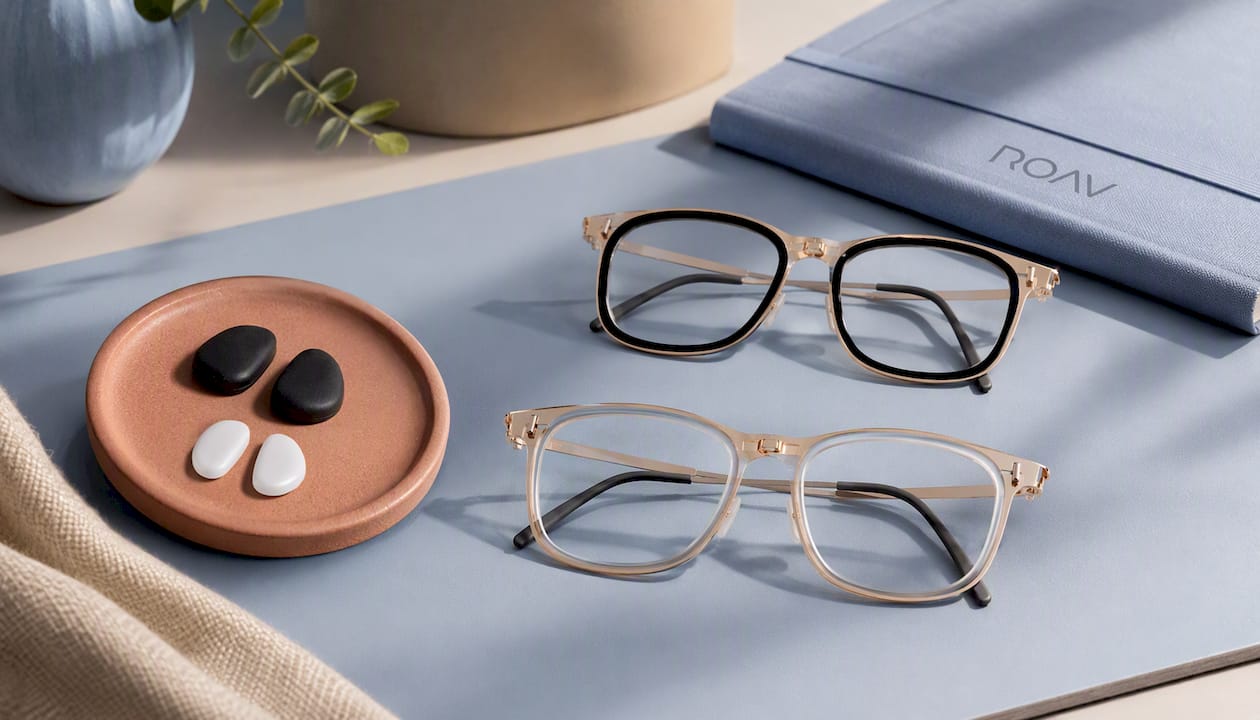
If your current pads have gone smooth or you just need more grip, the replacement nose pads in Black-White are designed as a direct upgrade for extra cushioning and hold, no professional installation required for most frame types. If it’s the frame itself causing the slide, the NIRO Gold+Black in Clear is built with fit-forward proportions and the same lightweight, foldable micro hinge design that keeps weight off the bridge in the first place. The NIRO Gold+Crystal in Clear offers the same fit advantages in a different finish, if you want the function without the exact same look. Pair either frame with temple grips for extra hold during workouts or travel, and check the fit guide against your current measurements before you order.
Sources
- All About Vision — How to adjust or replace eyeglass nose pads
- CNET — Glasses DIY adjustments
- Healthline — How to adjust glasses
- All About Vision — providers