

Stainless steel sunglasses frames hold up well for most active and outdoor lifestyles, from daily commuting to weekend hikes and travel. The real question isn’t whether stainless steel works. It’s which grade you’re getting: 304 or 316L, and whether the finish matches your exposure to sweat, salt air, or humidity. Skip that detail and even a good frame can disappoint. Get it right, paired with decent hinge design, and it’ll outlast most alternatives on the shelf.
TL;DR:
- Grade 316L stainless steel offers about 20 to 30 percent better corrosion resistance than 304, making it worth extra cost near saltwater or high humidity.
- PVD coatings significantly extend the lifespan of stainless steel frames, especially in harsh environments, when combined with proper maintenance routines.
- Authenticity is crucial; manufacturers should readily disclose whether a frame is 304 or 316L and detail the coating process used.
- For active outdoor use, stainless steel suits daily commuting and light outdoor activities but is less suitable for high-impact sports or heavy sweating.
- Foldable stainless steel frames with reinforced micro hinges offer a durable, compact option ideal for traveling and everyday portability.
Table of Contents
- Pros and cons of stainless steel sunglasses frames
- Material grades explained: 304 vs 316L, and when each matters
- Finishes, coatings, and maintenance to extend lifespan
- Which outdoor and active activities suit stainless steel frames?
- How to choose stainless steel sunglasses frames: a shopping checklist
- Why ROAV Eyewear’s stainless-steel foldable frames make sense for active life
- An editorial take on stainless steel’s real trade-offs
- Sources
- FAQ
Pros and cons of stainless steel sunglasses frames
Stainless steel earns its place in eyewear for one reason: it survives daily abuse that would warp cheaper alloys or crack brittle plastics. It resists corrosion better than plain steel, handles humidity without flaking, and takes coatings like PVD and electroplating well, which is why it shows up across so many frame lines. Against titanium, it loses on weight (titanium is significantly lighter) but wins on price and design flexibility. Against acetate or plastic, it wins on longevity, full stop.
There’s one caveat worth taking seriously: some stainless steel alloys contain nickel, and nickel allergy is a documented risk in spectacle frames, even when a product is marketed as hypoallergenic.
- Durability: resists dents, warping, and daily wear better than plastic or acetate.
- Corrosion resistance: solid across most climates, though grade matters (more on that below).
- Weight: heavier than titanium, but full-metal frames average only 18 to 25 grams, so it’s rarely a dealbreaker.
- Cost: more affordable than titanium, with more flexibility for bold colours and finishes.
- Allergy risk: nickel content isn’t zero, even in “nickel-free” labelled products.
Material grades explained: 304 vs 316L, and when each matters
The chromium content in stainless steel forms a passive oxide layer that blocks rust. Grade 304 has enough chromium for everyday resistance. Grade 316L adds molybdenum, which improves resistance to chloride, the compound in sweat and seawater that eats through weaker alloys.
That extra performance costs something. 316L stainless steel typically runs about 20 to 30 percent more expensive than 304, and it’s the grade worth seeking out if you live near the coast or sweat heavily during outdoor activity.
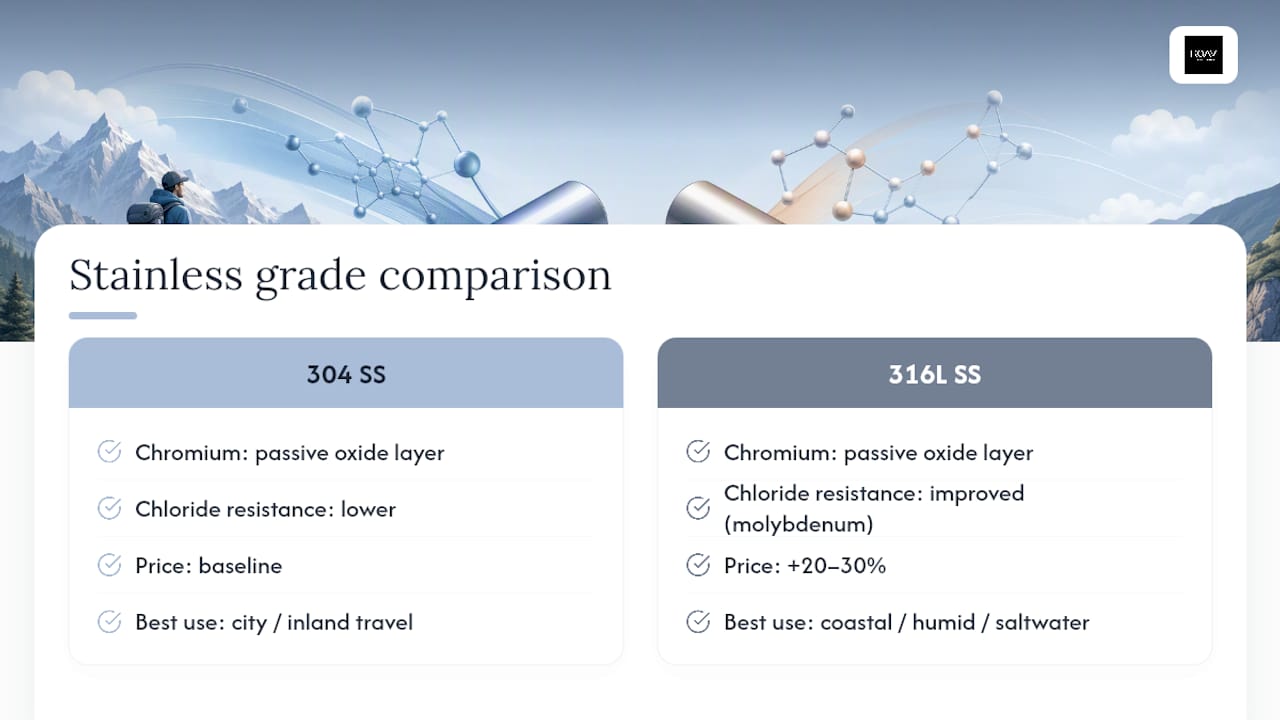
If your routine is mostly city streets, occasional hikes, or inland travel, 304 stainless steel handles it fine. Save the 316L premium for regular saltwater exposure, humid tropical climates, or if you’re someone who loses sunglasses to corrosion every couple of years and wants to stop that cycle.
Coatings shift the calculation too. A well-applied PVD finish on 304 can close some of the performance gap with bare 316L, though it won’t fully replace the alloy’s inherent resistance in genuinely harsh, salty conditions.
Finishes, coatings, and maintenance to extend lifespan
Surface treatment is where a mid-tier frame either becomes a five-year companion or a one-season disappointment. PVD coating and electroplating both add a protective layer that improves corrosion resistance and opens up colour options beyond raw metal. Alibaba’s manufacturing data suggests quality PVD treatment can extend a stainless-steel frame’s useful life significantly compared with untreated metal, especially in corrosive environments.
That coating only pays off if you take care of what’s underneath it. A few habits go a long way:
- Rinse frames with fresh water after sweat or saltwater exposure, ideally the same day.
- Wipe with mild soap and a soft cloth, never abrasive cleaners or paper towels.
- Dry fully before storing to prevent moisture from sitting in hinge joints.
- Store folded frames in a case or pouch rather than tossed in a bag with keys and coins.
- Check hinges periodically for grit buildup, especially after beach or trail use.
Pro Tip: If a seller can’t tell you whether a frame is 304 or 316L, or what coating process was used, that’s a red flag. A brand confident in its materials will hand over that information without hesitation.
Which outdoor and active activities suit stainless steel frames?
Matching the frame to the activity matters more than most buyers assume. Here’s how stainless steel performs across common scenarios:
- Walking, commuting, and travel: stainless steel is a strong fit here. Everyday wear, occasional rain, and typical humidity are well within what 304 or 316L can handle without special care.
- Urban cycling and light hiking: still solid, provided the frame has a secure nose bridge and temples that won’t slip with movement. Look for rubberised grip points if you’re active on trails.
- High-impact sports and heavy-sweat training: this is where stainless steel starts to show its limits. Constant sweat exposure and repeated flexing favour titanium or performance polymers designed specifically for sport use.
- Coastal living or frequent beach time: stick with 316L or a robust PVD-coated frame. Salt air is unforgiving on lower-grade alloys, even with occasional rinsing.
- Air travel and general portability: foldable stainless-steel designs shine here, since compact storage matters as much as material strength when a frame spends half its life in a bag or pocket.
Lens coverage matters as much as the frame material for most of these cases. Wraparound styles cut glare and wind exposure on bikes and trails, while polarized lenses reduce eye strain on water or snow, regardless of what the frame is made from.
How to choose stainless steel sunglasses frames: a shopping checklist
Comparing frames gets a lot easier once you know exactly what to ask about before buying, whether you’re shopping in person or scrolling product pages online.
- Confirm the grade. Ask directly whether it’s 304 or 316L, and don’t accept “premium stainless steel” as an answer without specifics.
- Ask about the finish. PVD and electroplated coatings both extend lifespan; find out which process was used and how it’s expected to hold up.
- Check the hinge. A weak hinge undermines an otherwise excellent frame. Foldable designs with reinforced micro hinges hold up better to daily folding and unfolding than standard screw hinges.
- Prioritise fit. Nose bridge width, temple length, and lens coverage should match your face shape and your activity, not just the display photo.
- Ask about warranty and repair. A brand that stands behind its hardware with a clear warranty or replacement-parts policy is signalling confidence in its own materials.
| Consideration | What to look for |
|---|---|
| Material grade | 304 for general use, 316L for coastal or high-sweat conditions |
| Coating | PVD or electroplating for added corrosion resistance |
| Hinge | Reinforced or micro hinge over standard screw hinges |
| Fit | Snug nose bridge, secure temples, adequate lens coverage |
| Warranty | Clear policy on repairs or replacement parts |
Why ROAV Eyewear’s stainless-steel foldable frames make sense for active life
For readers who want the durability benefits of stainless steel without the bulk of a traditional metal frame, ROAV Eyewear built its lineup around solving exactly that trade-off. The patented micro hinge folds each frame down to a fraction of its normal size, so a stainless-steel pair fits in a shirt pocket instead of demanding a hard case and a dedicated bag pouch.
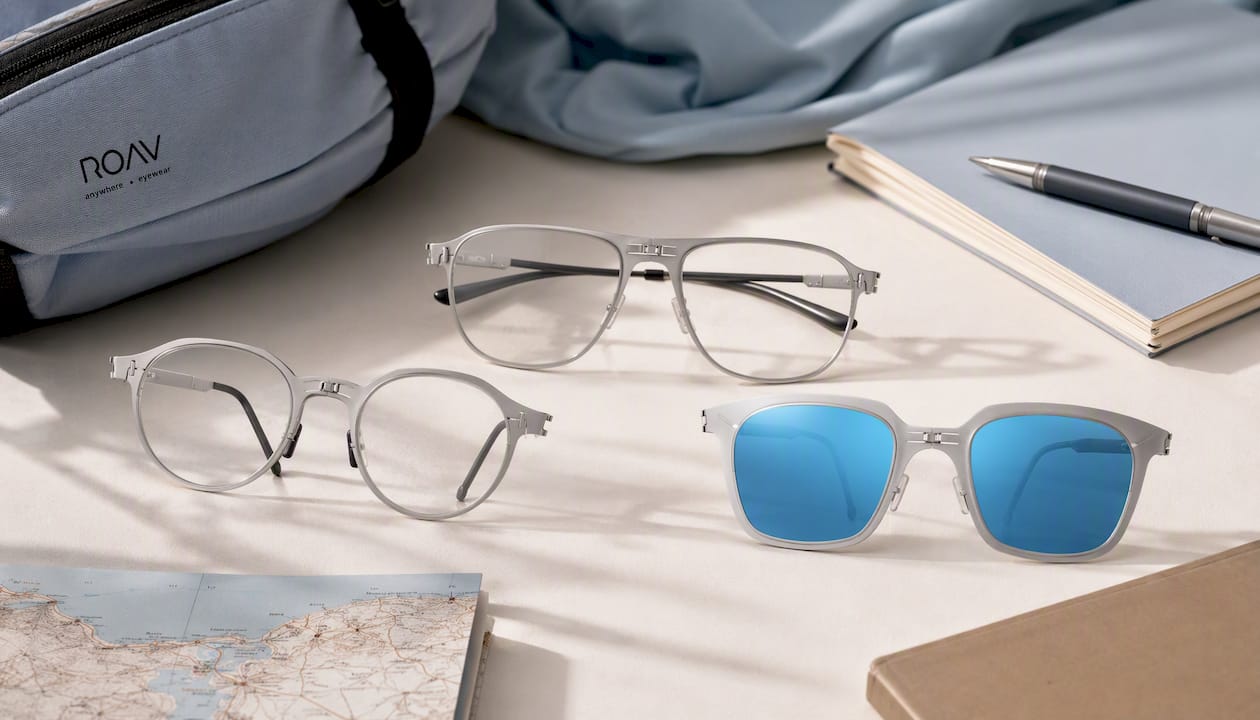
Three models worth a closer look if you’re comparing stainless-steel options: ACE Steel | Clear offers a clean, versatile profile for daily wear and travel; ROCK Steel | Clear leans into a bolder frame shape for those who want more presence; and STEVIE Steel | Sky brings a distinct tint and style for anyone who wants their sunglasses to do double duty as a fashion statement. Each includes polarized UV protection and a waterproof pouch, so the frame’s durability isn’t the only thing carrying the load outdoors.
Before you buy, check the product page for the specific grade and coating details on the model you’re eyeing; it takes thirty seconds and tells you exactly what you’re getting for the price. Then place your order and take the fold-and-go convenience with you on the next trip.
An editorial take on stainless steel’s real trade-offs
Most buying guides treat stainless steel as a single category, as if every frame stamped with that label performs the same way. That’s the biggest blind spot in how people shop for eyewear. A 304 frame with no coating and a 316L frame with quality PVD treatment are not the same purchase, even at similar price points, and most shoppers never ask which one they’re holding.
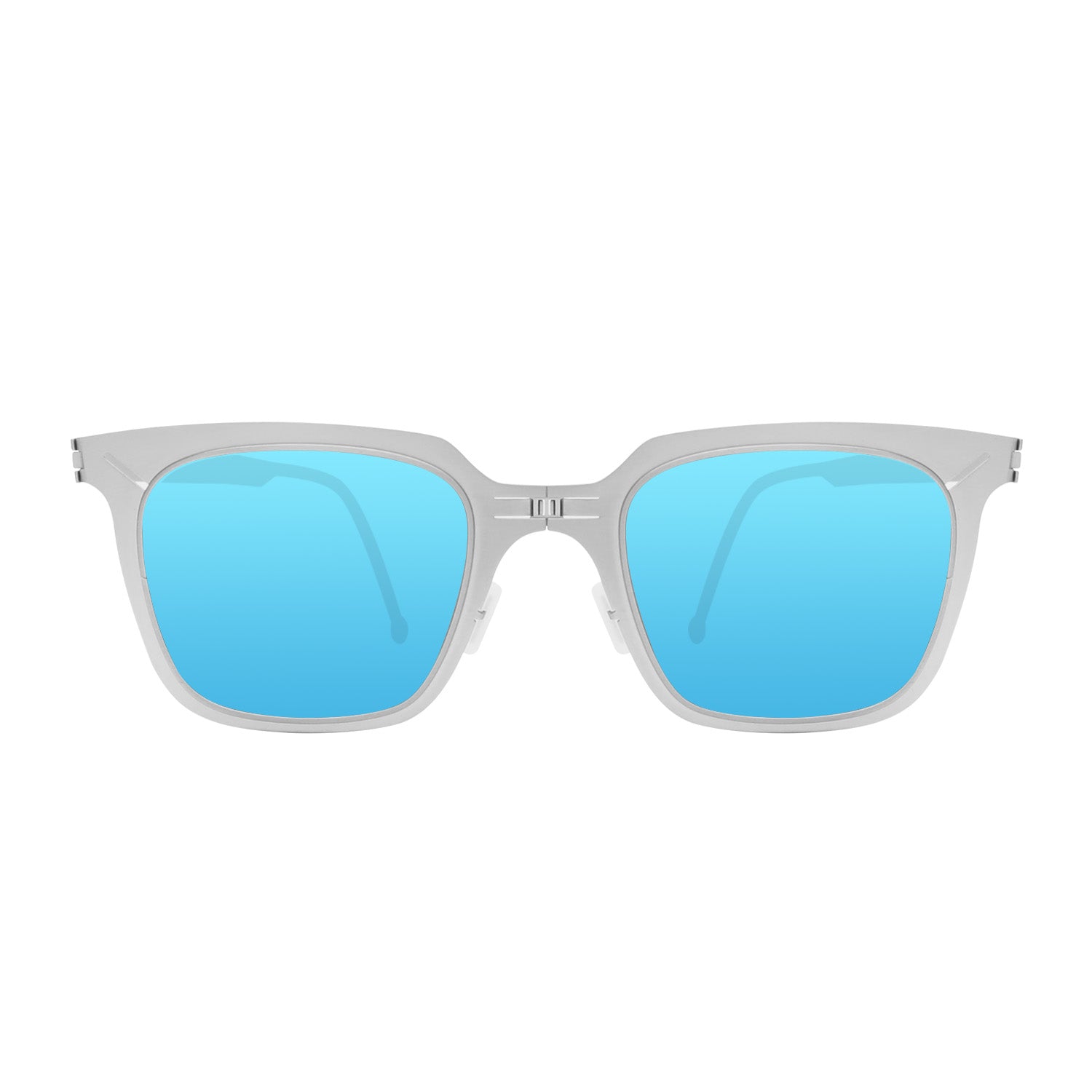
Some eyewear brands focus on foldable frames for travel, commuting, and daily wear, using micro hinge technology to address the common complaint of bulk in metal eyewear. That’s not a claim about outperforming every material on every metric. It’s a recognition that portability and durability rarely coexist in traditional frame designs, and that gap is worth closing.
If there’s one habit worth adopting, it’s asking sellers pointed questions about grade and coating instead of trusting a label. The eyewear industry doesn’t volunteer that information often. Buyers who ask for it consistently end up happier a year later.
— Thomas
Sources
- Unveiling nickel-free metals: the quest for skin-friendly choices
- Materials and allergens within spectacle frames: a review
- Stainless steel material guide - Alibaba.com Seller Blog
FAQ
Is 316L stainless steel worth the extra cost?
Yes, if you’re regularly near saltwater or in high humidity. The 20 to 30 percent price premium over 304 buys meaningfully better resistance to the chloride that causes corrosion.
Are stainless steel sunglasses frames hypoallergenic?
Not guaranteed. Stainless steel can contain nickel, and nickel allergy remains a recognised risk even when a product is labelled hypoallergenic, so test carefully if you have sensitive skin.
How much heavier is stainless steel than titanium?
Titanium frames run roughly 30 to 40 percent lighter than stainless steel, though most full-metal stainless frames have a manageable weight.
Do PVD coatings actually make a difference?
Yes. Quality PVD treatment can extend a frame’s usable life by two to three times in corrosive conditions compared with untreated stainless steel.
Can foldable stainless-steel frames handle daily travel?
Yes, when the hinge is well engineered. Foldable stainless-steel frames with well-engineered hinges can handle repeated folding without loosening over time.