

Fit and proportion decide whether sunglasses flatter you, not a rigid face-shape label. Round faces generally look sharper in angular or aviator frames; square jaws soften under rounded or oval lenses; heart shapes gain balance from wider bottoms; ovals can wear almost anything if the scale is right. Lens width and bridge fit still control how much UV protection you actually get, so a compact, adjustable option is worth trying before you commit to a shape.
TL;DR:
- Accurate face measurements, especially of the cheekbone and jaw width, are more reliable than face-shape labels for choosing sunglasses that fit well.
- Frame size matters more than shape: lens width should match your face width close to the temples, and bridge fit should be snug without pinching.
- Contrasting frame styles, such as angular on round faces and rounded on square faces, create better balance than matching face shape exactly.
- Material and construction influence comfort and durability; titanium and flexible polymers offer lightweight comfort for different face shapes.
- Measuring your face details before shopping, rather than relying solely on style guides or labels, ensures a better fit and UV protection.
Table of Contents
- What’s your face shape? A measurement-first sunglasses guide
- Frame recommendations by face shape: what to buy and what to skip
- Reading the numbers on the frame: how sizing actually works
- Contrast, colour, and when to ignore the rulebook
- Testing fit at home before you buy
- Why measurement-first advice holds up (and who’s behind it)
- How different sunglasses materials affect comfort and style per face shape
- Choosing lens types: polarized, tinted, and gradient by use case
- The most common face-shape mistakes people make when buying sunglasses
- Maintenance tips to keep sunglasses fitting well and looking good
- What actually matters when you’re shopping for sunglasses
- Try the PRESLEY line built for real-world fit and travel
- Sources
What’s your face shape? A measurement-first sunglasses guide
Guessing your face shape from a photo usually gets it wrong. The mirror-outline method and three measurements settle it in under five minutes, and they matter more than staring at a chart trying to decide if your jaw is “square” or just strong.
Start with the mirror-outline trick. Pull your hair back, stand close to a bathroom mirror in decent light, and trace your reflection directly onto the glass with a washable dry-erase marker or a bar of soap. Step back and look at the outline: is it wider at the cheekbones, the jaw, or roughly even top to bottom? Wipe it off with a damp cloth when you’re done. Don’t use a permanent marker, and don’t try this on a mirror you can’t clean afterward.
Then take three measurements with a soft tape measure or a piece of string held against a ruler:
- Face length: hairline to chin tip, straight down the centre of your face.
- Cheekbone width: the widest point across your cheekbones, ear to ear at that level.
- Jaw width: the widest point along your jawline, just above the corners.
Compare the numbers. If cheekbone width and jaw width are close and face length is only slightly longer, you’re likely oval. If jaw and cheekbone width are nearly equal and the face length is close to that same number, you’re probably square or round, depending on whether your jawline feels angular (square) or curved (round). A face length noticeably longer than either width usually signals oblong. A wider forehead and cheekbone line tapering sharply to a narrow chin points to heart or diamond, depending on how narrow the forehead is by comparison.
These per-shape guides, including the step-by-step measurement methods on wikiHow, remain the standard consumer reference, but they’re a starting point, not a verdict.
Here’s what most guides skip: plenty of faces don’t sort cleanly into six categories. If your measurements sit between two shapes, or your face reads differently depending on the angle, stop trying to force a label. Look instead at your most prominent feature, usually your cheekbones or the bridge area between your eyes, and choose frames that work with that specific feature rather than an abstract shape name.
Pro Tip: If your cheekbones are your most defined feature, prioritise frames that sit at or just below that line. A frame that crosses awkwardly through the middle of a strong cheekbone almost always looks off, regardless of what shape category you land in.
Frame recommendations by face shape: what to buy and what to skip
Stylists have landed on a consistent principle across the last several seasons: contrast, not matching. An angular frame on a round face creates definition; a soft, rounded frame on a square jaw creates balance. This is the core advice from stylists interviewed by The Independent, and it holds up better than the older rule of “match your frame to your face.”
Round faces
Round faces have soft curves and roughly equal width and length, with full cheeks and a rounded jawline. The fix is angles.
- Choose rectangular, geometric, or classic aviator frames with a defined brow line.
- Wayfarer-style shapes work well because the straight top edge cuts across the curve of the cheek.
- Avoid round or oval lenses that echo your own face shape. They erase the definition you’re trying to create.
- Skip anything with soft, low-contrast edges. It’ll disappear into your features instead of framing them.
The fit reminder here matters as much as the shape: lens width should sit close to your face width at the temples, not noticeably wider, or the angular effect gets lost in oversized plastic.
Square faces
Square faces have a strong jawline, a broad forehead, and minimal curve anywhere along the perimeter. Rounded frames counter that.
- Round or oval lenses soften the angles without hiding them.
- Cat-eye shapes with a gentle curve work if you want something with more personality than a plain round lens.
- Avoid boxy, heavy rectangular frames. They double down on the angularity you already have and can make a strong jaw look harder.
- Skip thick, straight brow lines that mirror your own brow shape.
Bridge fit is the detail most square-faced shoppers miss. A wider face often needs a slightly wider bridge measurement, or the frame sits pinched and uneven across the nose.
Oval faces
Oval faces are the closest thing to a wildcard in this list. Cheekbones are slightly wider than the forehead and jaw, the jaw curves gently rather than squaring off, and overall proportions stay balanced.
Almost any frame shape works here, which means the real decision comes down to scale rather than silhouette. A 2026 trend piece from Who What Wear flags oversized frames as a dominant style, but cautions that bigger only works when it’s proportional. If a frame’s outer edge extends significantly past the width of your face, it’s not a bold style choice, it’s a fit mistake.
- Try geometric, angular, or rounder shapes since almost everything is fair game.
- Use this flexibility to chase trends rather than constantly seeking the “correct” style.
- Avoid frames so oversized they swallow your features entirely. Scale still counts even on a forgiving face shape.
Heart faces
Heart faces have a wider forehead and cheekbones that narrow to a delicate, sometimes pointed chin. The goal is adding visual width at the bottom of the frame to balance the wider top.
- Aviator styles work particularly well because the teardrop shape widens toward the bottom, echoing the width you already have up top rather than fighting it.
- Cat-eye frames with subtle, low-key detailing (rather than a dramatic upswept corner) can complement a narrower chin without drawing extra attention to the point.
- Avoid frames that are heavily decorated or embellished at the top corners. That adds more visual weight exactly where your face already carries the most width.
- Skip narrow, small lenses. They tend to emphasize the taper toward the chin instead of softening it.
Diamond faces
Diamond faces have dramatic cheekbones as the widest point, with a narrower forehead and jaw on either side. The strategy is opening up the eye area rather than adding more angles around already-prominent cheekbones.
- Oval and rimless frames let the eye area breathe and avoid competing with the cheekbone line.
- Cat-eye shapes can work if they’re detailed at the brow rather than heavy through the lower rim.
- Avoid narrow frames that sit tight against already-prominent cheekbones. They tend to emphasize width rather than balance it.
- Skip heavily decorated corners for the same reason heart-shaped faces should: it stacks visual weight on a feature that’s already the star.
Oblong and rectangular faces
Oblong faces are longer than they are wide, with a straighter cheek-to-jaw line than an oval. The job here is adding horizontal width and enough lens height to break up the vertical length.
- Wider frames with more lens height (taller lenses, not just wider ones) shorten the visual length of the face.
- Frames with decorative or contrasting temple details add width perception without needing an oversized lens.
- Avoid narrow, small lenses that elongate an already long face.
- Skip frames with minimal lens height. A shallow, slim lens does nothing to counter the vertical proportions you’re trying to balance.
Across every shape, the fit check is the same: hold the frame up and check that lens width roughly matches your face width at the temples, and that the bridge doesn’t pinch or leave a visible gap. A frame that flatters your face shape on paper still fails if it slides down your nose by lunchtime.
Reading the numbers on the frame: how sizing actually works
Every pair of sunglasses carries three numbers stamped inside the temple arm, usually something like 52-18-140. That’s lens width, bridge width, and temple length, all in millimetres, and it’s the single most useful piece of information on the frame, more useful than any face-shape chart.
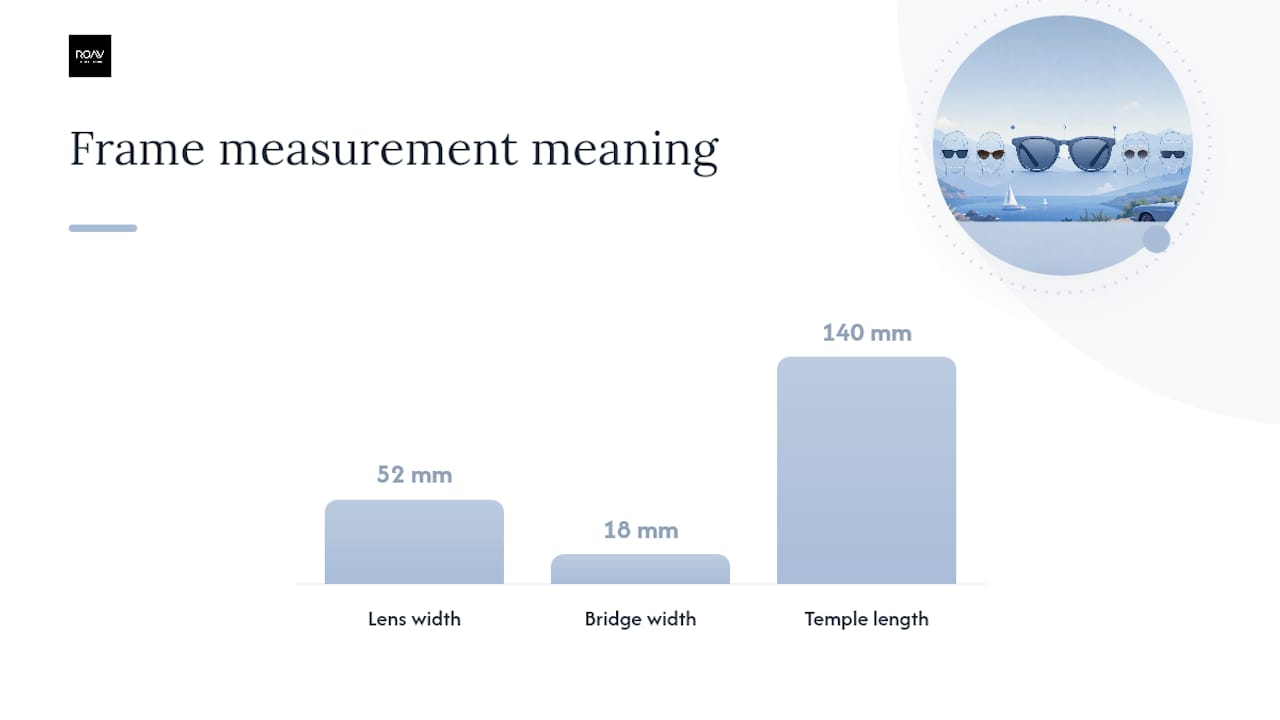
Lens width is the horizontal measurement across one lens. Bridge width is the gap between the lenses, where the frame rests on your nose. Temple length is the arm length from hinge to tip, which determines how the frame fits over your ears and how far it extends.
Guides that push measurement over face-shape labelling, including a detailed breakdown from Fashionide, make a fair point: two people with the “same” face shape can need frames that differ by 8 to 10 millimetres in lens width and still both fit correctly. The label tells you almost nothing about the number that actually matters.
There’s also a practical target worth knowing, sometimes called the eyewear sweet spot: lenses roughly as wide as your face at the temples, with lens height tall enough to cover from the centre of your eyebrow down to about two thirds of the way to the tip of your nose. That’s the range described in a detailed fit breakdown from The Essential Man, and it works as a genuinely useful shortcut when you’re comparing several pairs online.
| Measurement | What it controls | Rough target |
|---|---|---|
| Lens width | Coverage and how “big” the frame reads | Close to your face width at the temples |
| Bridge width | Whether the frame pinches or slides | No visible gap, no red marks after wearing |
| Temple length | Whether arms sit flush over the ears | Arm reaches the ear without pressing or gapping |
| Lens height | UV coverage above and below the eye | Brow centre to roughly two thirds down the nose |
Bridge fit and temple length get less attention than lens shape, but they’re doing the real work of keeping UV rays out. A frame that slides down your nose during a walk isn’t just annoying, it’s letting light in underneath the lens, which defeats the point of wearing sunglasses at all. Stylist and trend teams covering 2026 eyewear flag this specifically: silhouette gets the attention, but bridge fit and temple length are what actually keep a frame doing its job.
Before you buy, whether online or in a shop, run through this checklist:
- Measure your own face width, bridge gap, and preferred lens height using a soft tape measure.
- Compare those numbers directly against the frame’s stamped measurements, not just the product photo.
- If trying in person, check for red marks or pinching at the temples after wearing the frame for a few minutes, not just a few seconds.
- Ask an optician to check pantoscopic tilt (the slight downward angle of the lens) if you’re buying prescription sunglasses. It affects both comfort and how much UV coverage you get at the bottom of your field of vision.
Contrast, colour, and when to ignore the rulebook
The most useful style rule in sunglasses shopping is contrast, not matching. Angular frames balance round faces. Round frames balance angular ones. That principle, backed by stylists in The Independent’s face-shape guide, does more heavy lifting than any six-category chart.
Lens colour and frame colour shift perceived balance too, and this is where most guides stop short. A dark, opaque lens visually shrinks the eye area and can make a narrow face look narrower still. A lighter tint, or a gradient like a moonrise fade from dark to translucent, softens the transition between frame and skin and tends to read as more proportional on angular faces. Metallic or light-toned frames (gold, rose gold, light tortoise) draw less attention to the frame’s outline, which helps if you’re wearing a bold shape you’re not fully sure about yet.
- Try a mismatched pairing on purpose: a soft cat-eye on a square jaw, or a sharp geometric frame on a round face, before assuming a “safe” shape is your only option.
- Let a strong colour trend (bold gradient lenses, coloured frames) override strict proportion advice occasionally. Fashion sunglasses are a lower-commitment way to experiment than a haircut.
- Skip gendered framing altogether. Aviators, cat-eyes, and round frames all work across styling preferences; lean into scale and colour rather than category labels to land on a masculine or feminine feel.
Pro Tip: If you’re torn between two frame shapes, buy the one that contrasts more with your face shape, not the one that matches. Contrast almost always photographs better and reads as more intentional in person.
Accessory choices reinforce or undercut the same balance principles. A structured cap or visor paired with round sunglasses, for instance, can double down on curves in a way that fights your frame instead of complementing it, a dynamic covered well in Jaguar Golf’s guide to flattering cap shapes.
Testing fit at home before you buy
Virtual try-on tools are a fine starting point, but they work only when you control for distance, lighting, and angle. Hold your phone at arm’s length, use neutral daylight rather than a dim room or harsh overhead light, and capture a straight-on shot plus a three-quarter angle. Retailer fit tools, including the one on LensCrafters Canada’s face-shape page, work reasonably well for this, but they’re a screening step, not a final answer.
Follow this sequence before ordering:
- Take a straight-on photo holding a ruler or a credit card (standard width, 85.6mm) flat against your forehead for scale.
- Take a profile shot to check your nose bridge shape, high, low, or narrow, since that affects how a frame’s bridge design will sit.
- Compare your measured lens-width target against the frame’s stamped size before adding it to cart.
- Check the return policy specifically for fit issues: many online retailers allow exchanges but not full refunds once lenses are marked as worn.
- Look for nose pad adjustability and bendable temples. Both let you fine-tune fit after the frame arrives, without needing a full exchange.
Some retailers layer in automated face-shape analysis on top of their try-on tools. Clearly’s face-shape guide is a reasonable example, but treat any automated recommendation as a second opinion, not a verdict. Software reads geometry; it doesn’t know that your cheekbones are your best feature or that you’ve always hated how round frames sit on your particular nose.
If a frame still feels off after adjusting nose pads and temples, that’s the point to visit an optician rather than keep guessing. A five-minute in-person adjustment often fixes a fit problem that no amount of online measuring could catch.
Why measurement-first advice holds up (and who’s behind it)
This guide leans on measurement over labelling because that’s what actually predicts comfort and UV coverage. It draws on ROAV Eyewear’s own foldable sunglasses guide, written by Thomas, who focuses on foldable eyewear and travel-friendly frame design, areas where fit precision matters more than most categories of eyewear because a frame that’s even slightly off tends to show up fast during a full day of wear or a long flight.
The most common fit complaint isn’t about style, it’s about a frame that looked right in a photo and then slipped, pinched, or let light in around the edges within the first hour of wearing it. That’s a measurement problem, not a face-shape problem.
[brand_signal] Certain foldable frames use patented micro hinge technology that lets them fold down to a fraction of their open size, which matters for people who want a pair of sunglasses they can actually carry rather than leave in a case at home. [brand_signal] Many customers have chosen these frames, and every pair carries UV protection regardless of finish or lens tint.
The sizing logic maps directly onto the measurements covered earlier. PRESLEY frames list lens width, bridge width, and temple length on the product fit page, the same three numbers this guide has walked through. Measure your face first, then compare those numbers against the stamped size, exactly the same process as buying any other frame, foldable or not.
How different sunglasses materials affect comfort and style per face shape
Frame material changes how a shape actually performs on your face, not just how it looks in a product photo. Acetate, the thick plastic used in most cat-eye and oversized frames, holds colour and pattern well and suits fuller, more dramatic shapes on round or oval faces, but it’s heavier, which matters if you have a smaller nose bridge that needs to support that weight all day.
Metal frames (titanium, stainless steel, or lightweight alloys) work well for aviator and geometric shapes because thin metal arms hold a defined angle without adding bulk, a good match for round or oval faces that need definition without visual weight. Metal also flexes slightly at the temples, which helps with comfort on narrower heads.
TR90 and other flexible polymer blends, common in foldable and travel frames, split the difference: light like metal, durable like acetate, and forgiving enough to handle the folding and unfolding that a compact travel pair goes through repeatedly. That flexibility matters most for square or diamond faces choosing rounded frames, since a stiffer rounded shape can look slightly awkward if it doesn’t sit with a gentle curve against angular features.
Rimless or semi-rimless designs reduce visual weight almost entirely, useful for diamond faces trying to open up the eye area, but they offer less structural support, so bridge fit needs to be closer to exact.
Choosing lens types: polarized, tinted, and gradient by use case
Lens type matters more for how you’ll use the sunglasses than for your face shape specifically, though the two do interact through tint and how much attention the lens draws to your eye area.
Polarized lenses cut glare off flat, reflective surfaces: water, snow, pavement, car windshields. They’re the right call for driving, boating, or beach days, and worth prioritizing regardless of face shape since glare reduction is a functional benefit, not a style one. The trade-off is that polarized lenses can slightly dim screens (phone or dashboard displays), worth knowing if you check your phone often while wearing them.
Standard tinted lenses (grey, brown, green) don’t cut glare the same way but offer more flexibility in colour and gradient effects, useful for the style-balance points covered earlier. Grey keeps colour perception most accurate, brown boosts contrast in low light, and green sits in between.
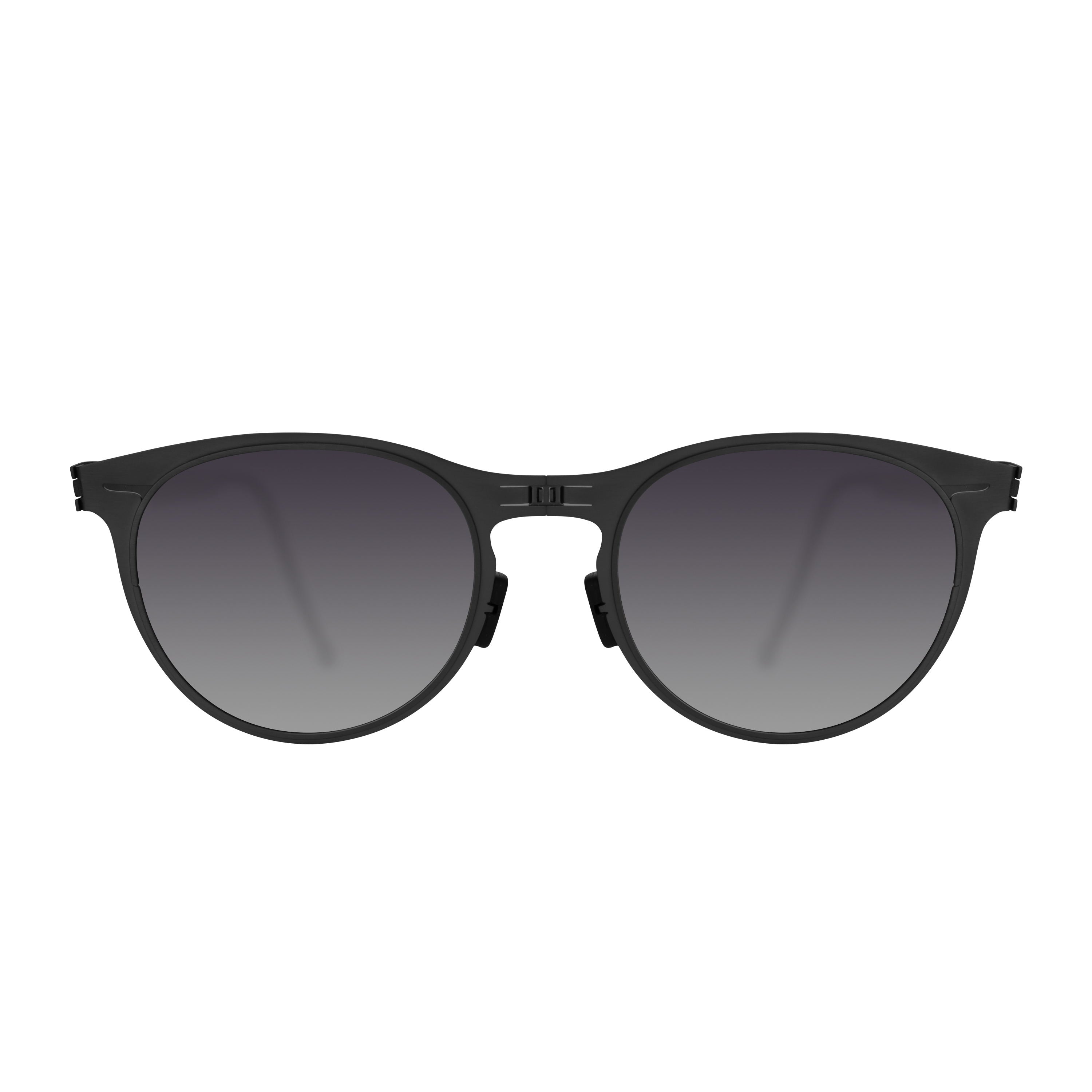
Gradient lenses, dark at the top fading to lighter at the bottom, do double duty: they cut glare from overhead sun while keeping your lower field of vision brighter, and they soften the visual weight of a large frame on a smaller face. A gradient like ROAV’s Moonrise finish works particularly well on rounder or smaller faces where a fully opaque lens can look heavy.
Match lens type to your actual use, then let tint handle the styling. Someone commuting by car most days benefits more from polarization than from chasing a specific colour trend.
The most common face-shape mistakes people make when buying sunglasses
The single biggest mistake is matching frame shape to face shape instead of contrasting them, buying round lenses because you have a round face, when the opposite creates more definition. This is the rule stylists most consistently push back on, and it’s the first thing to unlearn.
The second mistake is buying by lens width alone and ignoring bridge width. A frame can measure “right” across the lenses and still slide constantly if the bridge is too wide for your nose, which undermines both comfort and UV coverage since a slipping frame exposes the eyes from below.
Oversized frames bought purely because they’re trending, without checking that the lens width is actually proportional to face width, is a third common error. A frame that extends noticeably past your temples doesn’t read as bold, it reads as ill-fitting.
Skipping the return-policy check before buying online causes avoidable frustration too. Many retailers won’t accept a return once lenses show wear, so a frame that seemed fine in a photo but pinches after an hour becomes a sunk cost rather than an easy exchange.
Finally, plenty of shoppers rely entirely on a single face-shape chart and ignore mixed or borderline features, cheekbones that are more prominent than a “round” label suggests, or a jaw that’s squarer than an “oval” category implies. When your face doesn’t sort cleanly, prioritize your strongest individual feature over forcing a category match.
Maintenance tips to keep sunglasses fitting well and looking good
Fit degrades over time even on a well-chosen frame, usually from heat, pressure, or storage habits rather than any flaw in the original sizing.
Store sunglasses in a hard or padded case rather than a bag or pocket. Loose storage is the most common cause of bent temples and scratched lenses, and it’s an easy habit to fix. A folding frame’s case matters even more here since a compact case only protects the frame if you actually use it rather than tossing the glasses in loose.
Avoid leaving sunglasses on a dashboard or anywhere in direct heat. High temperatures soften acetate and some polymer frames enough to warp the shape slightly, which throws off the bridge fit you measured for in the first place.
Clean lenses with a microfibre cloth and, when needed, a small amount of lens cleaner or mild soap and water. Paper towels and clothing fabric both leave fine scratches over time, especially on polarized or coated lenses.
Bring frames to an optician periodically for a temple and nose pad adjustment, particularly if you’ve noticed any slipping. Small bends happen naturally from putting glasses on and taking them off, and a two-minute adjustment resets fit without needing a new frame.
What actually matters when you’re shopping for sunglasses
Face-shape charts get people started, but they’ve become a crutch that lets shoppers skip the one step that actually predicts whether a frame will work: measuring. I’d argue the entire six-category system is overrated as a decision tool and underrated as a vocabulary tool. It’s useful for describing what you’re looking at, not for dictating what you should buy.
Where conventional advice really falls short is bridge fit. Nearly every guide leads with lens shape and treats bridge width as a footnote, when it’s actually the measurement most likely to cause a frame to fail in daily wear. A gorgeous cat-eye that slides down your nose by 2 p.m. doesn’t a style win.
If you take one thing from this guide, measure your face before you shop, and treat any face-shape label as a rough starting point rather than a rule. Fit first, flattery second. The two usually end up in the same place anyway, just not always for the reasons the chart suggests.
— Thomas
Try the PRESLEY line built for real-world fit and travel
Some frames are built around the problem this guide keeps circling back to: a frame that fits your measurements and still folds down small enough to carry every day, not just leave in a case at home. Designs that let the frame collapse without stressing the joints give you a pair that holds its shape and bridge fit trip after trip, rather than loosening the way many folding frames do over time.
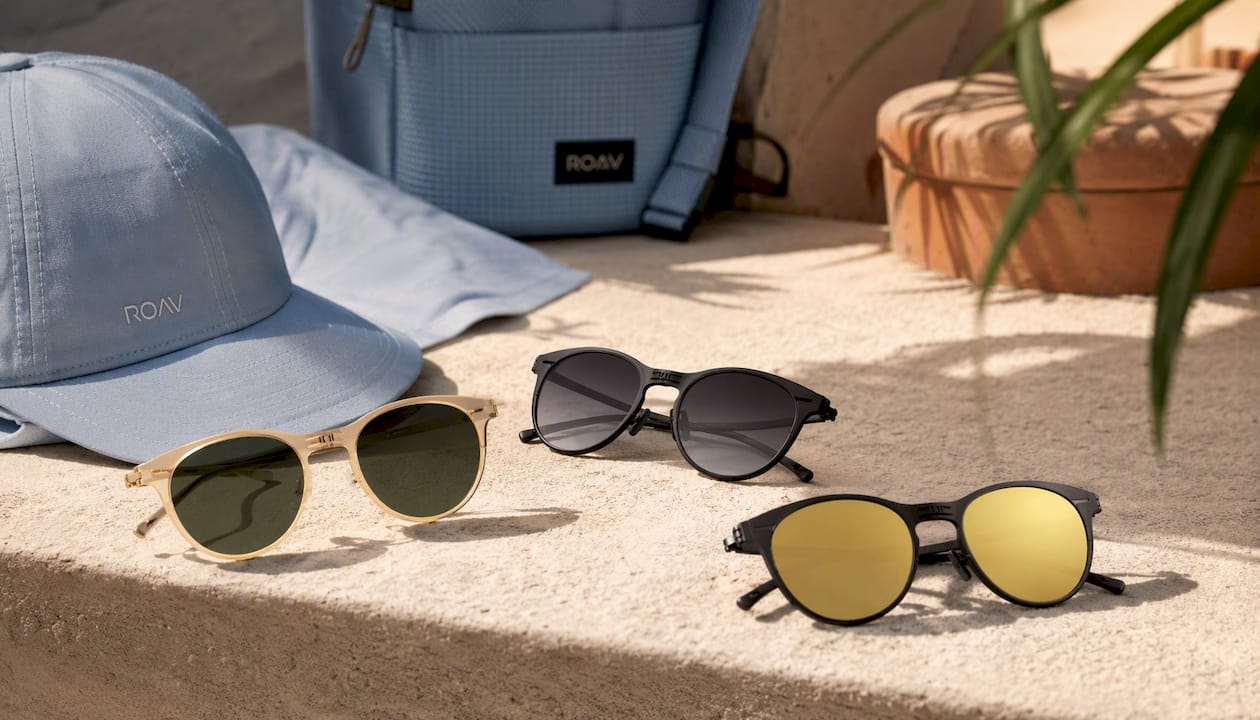
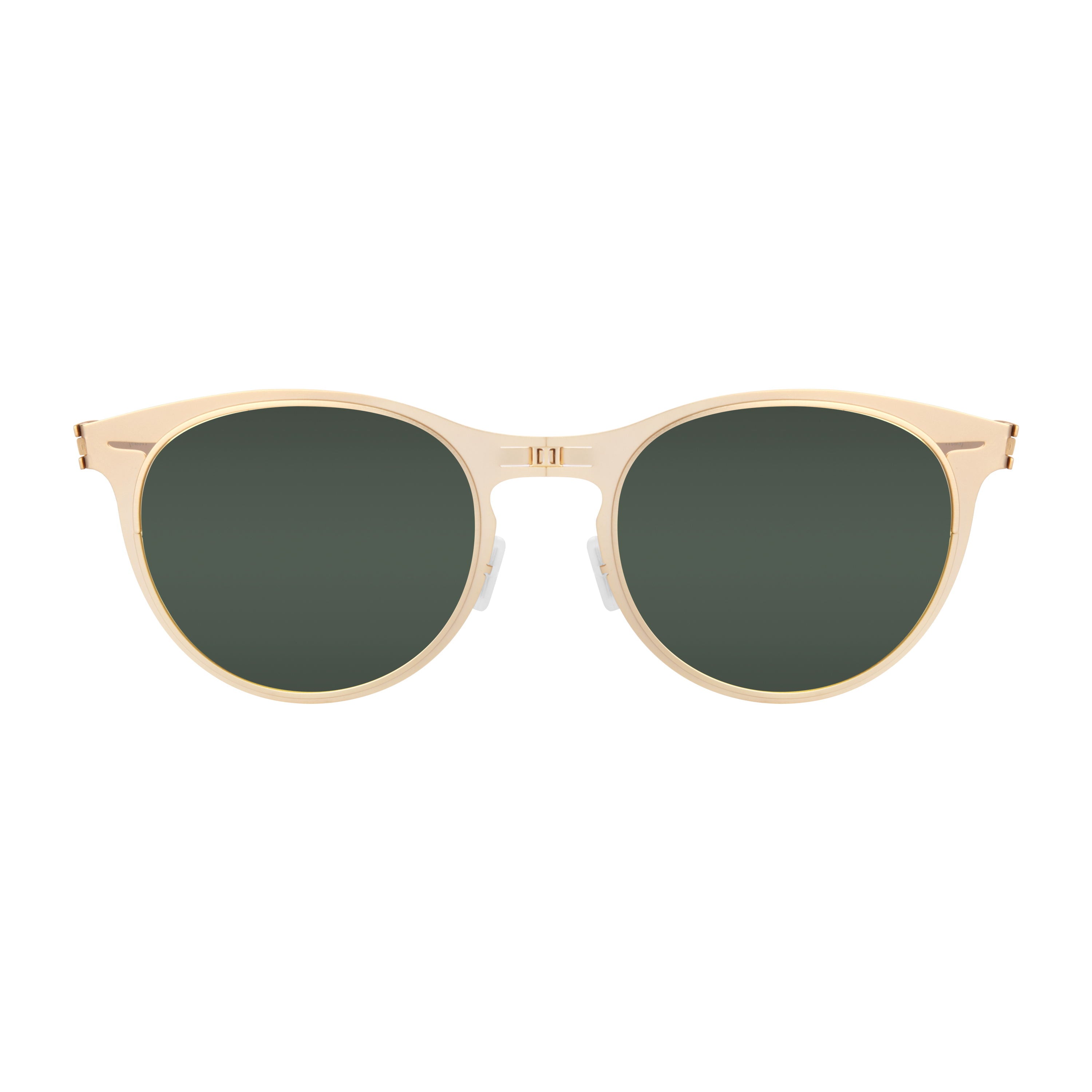
Different finishes may share the same sizing, so the fit advice from earlier in this guide applies directly no matter which one you pick. PRESLEY Gold | G15 pairs warm gold hardware with a neutral G15 lens, a strong match for the contrast principle if your frame shapes lean rounder. PRESLEY Black | Moonrise carries a grey gradient lens that softens visual weight, useful if you’re testing a bolder frame shape than you’re used to. PRESLEY Black | Copper combines a gunmetal frame with a copper-toned lens for more contrast and warmth against darker hardware.
Measure your face width, bridge gap, and preferred lens height using the checklist from earlier, then compare those numbers against the PRESLEY product fit details before choosing a finish. If you’re unsure between two, order the one with more contrast to your face shape and use the return window to confirm fit in person.
Sources
- The best 2026 sunglasses trend for every face shape | Who What Wear
- A guide to finding the perfect sunglasses shape for your face this summer | The Independent
- Sunglasses Fit 101: the face shape myth vs real measurements - Fashionide
- How to Pick the Best Sunglasses for Your Face Shape — The Essential Man
- Frames and face shapes: determining what flatters you — wikiHow
Retailer sizing charts are a fast way to screen options online, but they’re built on averages. An optician’s in-person measurement, or your own careful tape-measure check, will always beat a generic chart when it comes to how a specific frame sits on your specific face.